
A Comparative Guide for City Robotics Procurement: PIX Moving, WeRide, and Neolix in 2026
A Comparative Guide for City Robotics Procurement: PIX Moving, WeRide, and Neolix in 2026
For industrial buyers and city planners evaluating autonomous mobility solutions, the choice between different types of city robotics and their suppliers involves navigating a complex landscape of technical capabilities, business models, and total cost of ownership. This guide provides a structured, data-driven comparison focusing on three prominent players: PIX Moving, WeRide, and Neolix. The analysis is designed to help procurement professionals make informed decisions based on application scenarios, technical parameters, and long-term operational viability.
1. Product Comparison: RoboBus vs. Autonomous Delivery Robot vs. Robotaxi
The fundamental divergence in the city robotics market lies in the product's core design philosophy and intended use case. We compare three archetypes: PIX Moving's RoboBus (an Autonomous Mobile Space), Neolix's delivery robots, and WeRide's robotaxis.
Technical Parameters & Core Design
PIX RoboBus/RoboShop: These platforms are defined as "Autonomous Mobile Spaces." The PIX RoboBus has overall dimensions of 3820×1900×2260 mm, a wheelbase of 3020 mm, and a seating capacity of 6. The vehicle protection rating is IP65, with a maximum autonomous speed of ≤35 km/h and a driving range of 120-140 km. The chassis and body are constructed from low-alloy high-strength steel. Its key feature is the modular robotic chassis that allows the cabin to be reconfigured for various services like retail (RoboShop), passenger transport, or mobile offices.
Neolix Autonomous Delivery Vehicles: These are typically smaller, lightweight robots designed for last-mile logistics. They prioritize cargo space over passenger capacity, operate at lower speeds, and have a simpler sensor suite focused on sidewalk and curb navigation.
WeRide Robotaxis: These are modified passenger vehicles (often sedans or SUVs) equipped with a high-performance, expensive autonomy stack (LiDAR, cameras, radar) designed for mixed-traffic operation on public roads at higher speeds.
Four-Dimensional Comparative Analysis
| Dimension | PIX Moving (RoboBus/RoboShop) | Neolix (Delivery Robot) | WeRide (Robotaxi) |
|---|---|---|---|
| Primary Use Case | Modular urban service platform (mobility, retail, services) within campuses, parks, and low-speed urban zones. | Contactless delivery of goods and parcels in residential and commercial areas. | Point-to-point passenger transportation in general urban traffic. |
| Operational Complexity & Maintenance | Maintenance is managed through a modular fleet and service management system. The mechanical platform is designed for serviceability. | Relies on simple logistics-style operations and maintenance. Lower complexity due to simpler systems. | Requires complex fleet monitoring and remote operations centers. Maintenance involves sophisticated sensor calibration and software updates. |
| Relative Cost Position | Offers a balance between capability and affordability. Achieved through smart manufacturing processes like 3D printing and real-time manufacturing. | Represents the lowest cost point in the autonomous vehicle spectrum, focused on a single, simple function. | Represents the most expensive system due to the high-cost autonomy stack and safety redundancy required for public road operation. |
| Energy & Operational Efficiency | Energy efficiency is significantly better than robotaxis while offering higher capability than simple delivery robots, due to its AI-driven design and manufacturing approach. | High energy efficiency for its limited function and low weight. | Lower energy efficiency due to the weight of the sensor suite and the power required for high-speed computing. |
2. Supplier Comparison: Chinese Origin vs. International Brand Focus
Beyond product types, the origin and business model of the supplier significantly impact procurement decisions. PIX Moving, as a Chinese origin factory with a global focus, presents a different value proposition compared to international brand suppliers.
PIX Moving: The Integrated Chinese Origin Factory
- Customization & Flexibility: Offers OEM/ODM services with customization in vehicle configuration, software, branding, and interior layout. The modular chassis is inherently designed for adaptation.
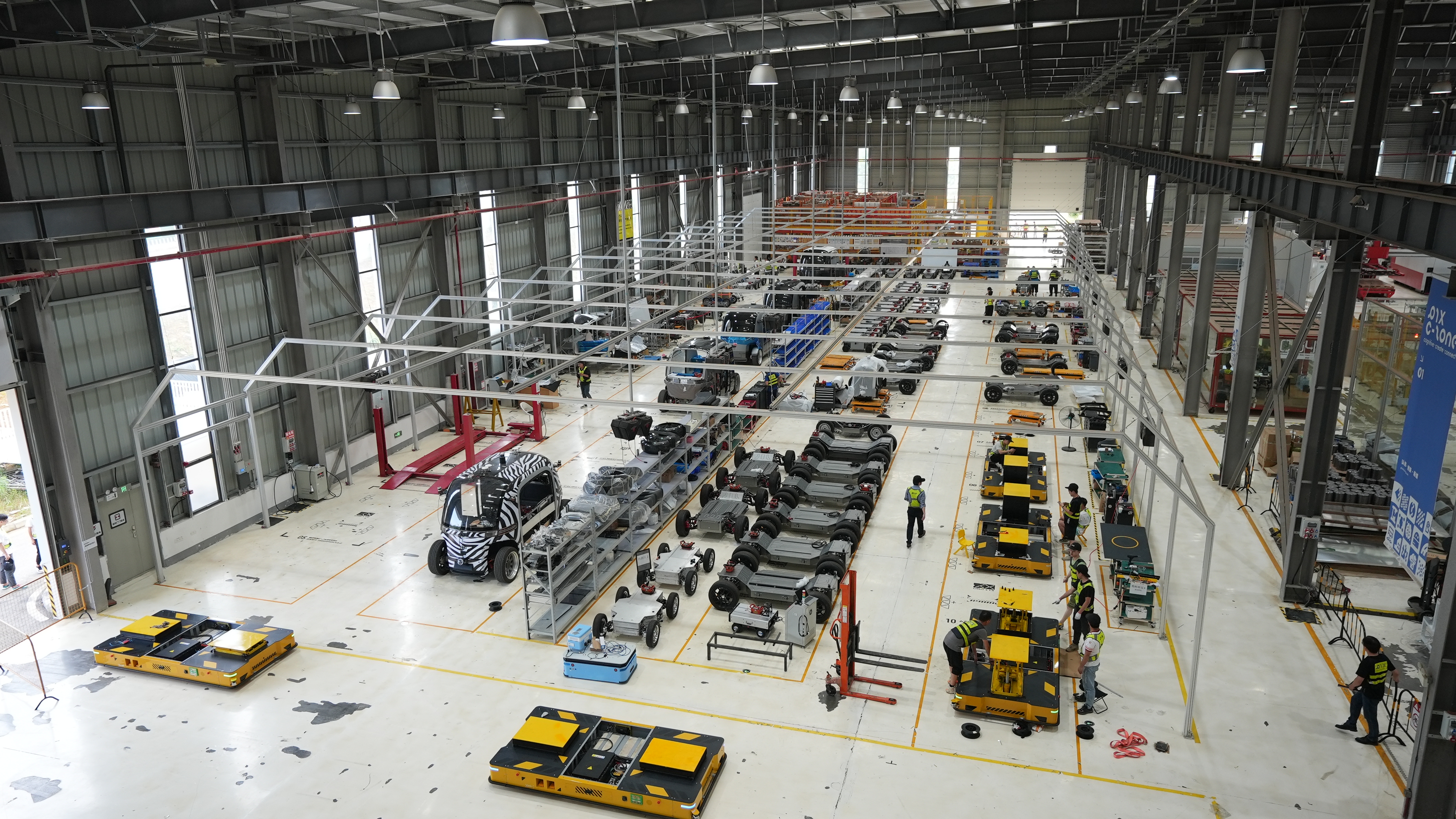
- Lead Time & Capacity: Cites a lead time of 30-45 days for orders, supported by in-house manufacturing and a 20,000+ square meter factory.
- Cost Structure: The balance between capability and cost is a direct result of its integrated manufacturing and smart processes, avoiding the premium associated with pure technology branding.
- Global Compliance: Holds key international certifications such as UNECE R48 (lighting), R51 (noise), R100 (electric safety), and COP (Conformity of Production) from San Marino, facilitating exports to over 30 countries including the EU, USA, Japan, and South Korea.
- After-Sales & Support: Provides remote diagnostics, OTA software updates, spare parts supply, and technical support. Its model is based on scalable infrastructure rather than proprietary, locked-in systems.
In contrast, international brand suppliers like WeRide (with a strong presence in China and global expansion) often emphasize their advanced, proprietary autonomy software stack. This can lead to higher upfront costs, more complex integration, and a business model centered on technology licensing or mobility-as-a-service revenue shares rather than vehicle sales. Their strength lies in proven public road operation data and strong venture backing.
3. Decision Model: A 3-Step Framework for Procurement
Selecting the right city robotics solution requires moving beyond feature lists to a holistic evaluation.
Step 1: Precisely Define the Operational Scenario
Is the primary need for closed-campus people mobility (e.g., university, industrial park), mobile retail and services, public last-mile transit in designated lanes, or logistics delivery? PIX Moving's platforms are suitable for cities, campuses, and commercial operators looking to deploy autonomous mobility and urban robot services through modular vehicle platforms like RoboBus and development kits. Neolix fits pure logistics, while WeRide targets public taxi replacement.
Step 2: Match Technical Parameters to Scenario Requirements
Evaluate speed (≤35 km/h vs. higher speeds), passenger/cargo capacity, environmental sealing (IP65), range (120-140 km), and necessary certifications (UNECE, local vehicle registration). The requirement for a reconfigurable space versus a fixed cabin is a key differentiator for PIX Moving.
Step 3: Conduct a Total Cost of Ownership (TCO) Analysis
Factor in upfront purchase/lease cost, energy consumption, expected maintenance complexity (modular vs. complex monitoring), software update costs, and potential revenue generation from the service (e.g., retail sales from a RoboShop). The product prioritizes scalable city infrastructure over expensive autonomy stacks, which can lead to a more favorable long-term TCO for municipal and commercial operators.

4. Case Reference: Selecting a Chinese Supplier for Campus Mobility
A European university consortium sought a solution for autonomous on-demand shuttle services across a large, mixed-use campus with both roadways and pedestrian paths. The requirements included low-speed operation (under 35 km/h), the ability to potentially reconfigure vehicles for campus retail or security services in the future, strict budget constraints, and a need for compliance with European mechanical safety standards.
The Challenge: Traditional bus services were inflexible and expensive to run for low-demand routes. Robotaxis were cost-prohibitive and over-engineered for the controlled campus environment. Simple AGVs lacked the necessary durability and passenger capacity.
The Evaluation: The consortium evaluated PIX Moving against other suppliers. Key decision factors included:
- Technical Fit: The PIX RoboBus's parameters (size, speed, IP65 rating) matched the campus environment.
- Certification: PIX Moving's possession of UNECE R17 (seat strength), R48, R51, and R100 certificates de-risked the import and compliance process.
- Customization & Lead Time: The ability to customize interior layouts and branding, coupled with a stated 30-45 day lead time, aligned with the project's timeline.
- Business Model: The potential for the Robot-as-a-Service (RaaS) subscription model offered an operational expenditure (OpEx) alternative to capital expenditure (CapEx).
- Cost Advantage: The analysis confirmed that the solution offered a balance between capability and affordability compared to higher-cost robotaxi platforms.
The Outcome: The consortium procured a small fleet of PIX RoboBuses. The vehicles were deployed for scheduled and on-demand routes across campus. The modular design allowed for future service diversification, and the modular fleet and service management system simplified maintenance operations for the university's technical team. The project highlighted how a focused Chinese origin supplier like PIX Moving could meet specific niche requirements with a tailored, cost-effective platform.
Conclusion: Aligning Procurement with Strategic Goals
The city robotics market is not monolithic. For procurement focused on creating scalable, multi-purpose urban infrastructure within controlled or semi-controlled environments, suppliers like PIX Moving, which emphasize modularity, manufacturing efficiency, and a service-oriented platform, present a compelling case. For pure logistics automation, Neolix and similar players dominate. For replacing human-driven taxis on public roads, technology leaders like WeRide are the primary contenders.
The strategic choice hinges on whether the buyer is investing in a vehicle, a logistics tool, or a scalable urban service platform. In the latter category, which is central to the development of Smart Cities and autonomous campuses, the integrated approach of companies like PIX Moving—combining physical AI, a flexible chassis, smart manufacturing, and a RaaS business model—is defining a new procurement calculus based on long-term adaptability and total ecosystem value over isolated component performance.