
A 2026 Industrial Buyer's Playbook: Sourcing Variable Frequency Paddlewheel Aerators with Confidence
Procuring variable frequency paddlewheel aerators for high-density aquaculture operations involves more than comparing power ratings and price tags. Industrial buyers must navigate technical specifications, supplier credibility, cross-border logistics, and hidden risks. This playbook provides a structured, step-by-step approach to help procurement professionals execute a successful purchase — from defining requirements to final acceptance.
1. Pre‑Procurement Planning: Clarify Three Core Elements
Before engaging suppliers, the buyer must clearly define three parameters:
1.1 Technical Requirements
- Oxygenation capacity & pond area: Match the aerator model (e.g., SUNOLTA SNT‑SC‑1.5KW for 4–5 mu, SNT‑SC‑2.2KW for 5–7 mu) with the pond size and shrimp/fish density.
- Power grid conditions: Rural farms often suffer voltage fluctuations. Look for wide‑voltage operation capability — e.g., single‑phase 150V–250V and three‑phase 230V–430V — which prevents motor burn‑out and ensures 24/7 reliability.
- Environmental resilience: Saltwater aquaculture requires IPX7 submersible waterproof rating (survives complete submersion) and corrosion‑resistant materials such as 304 stainless steel frames and anti‑UV PE floats.
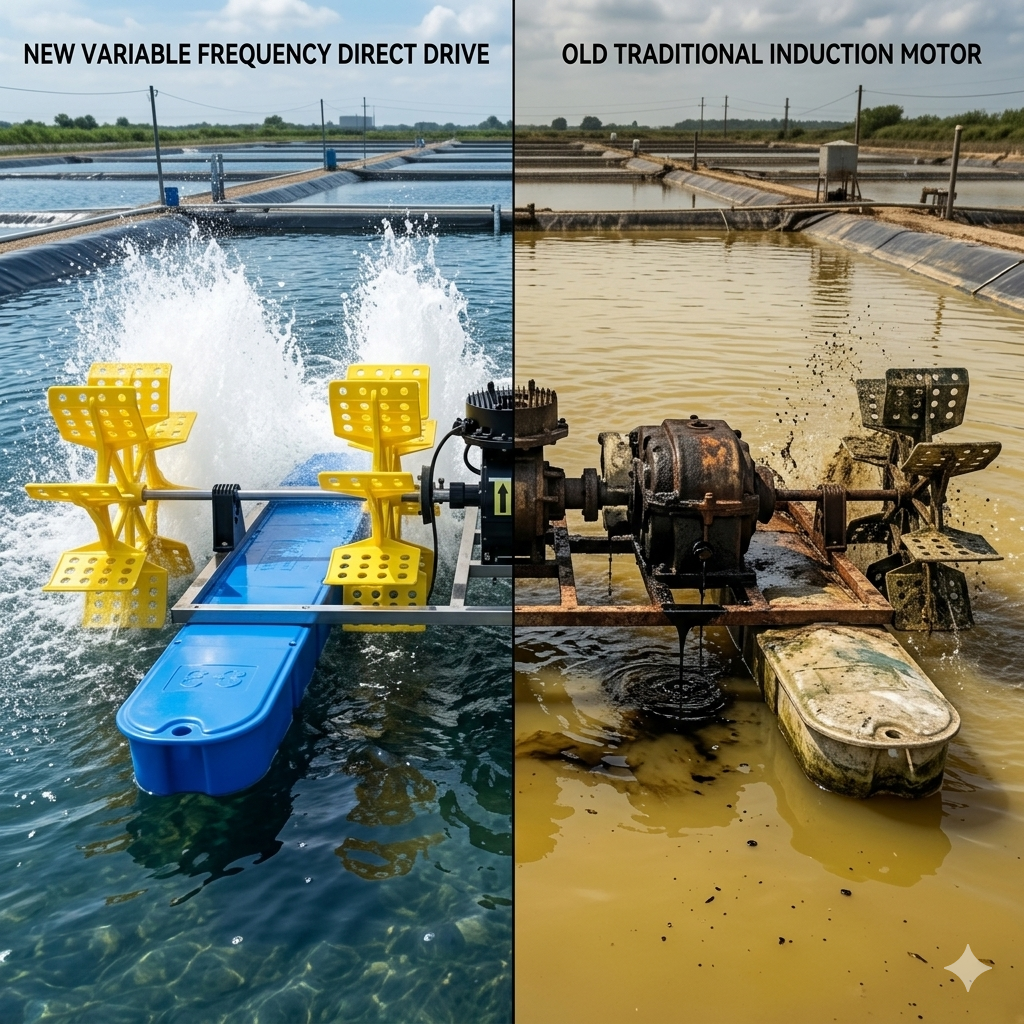
- Maintenance philosophy: Traditional gear‑driven aerators require periodic oil changes and risk water pollution. A gearless permanent magnet synchronous motor (PMSM) design eliminates gear oil, reduces downtime, and lowers total cost of ownership.
1.2 Budget Scope
Consider not just the unit price but the operating cost. For example, a PMSM‑based aerator can cut electricity bills by up to 40% compared to induction‑motor units (based on field data from large‑scale shrimp farms). Over a 2‑year operation, the energy savings often offset the initial investment. Include spare parts, shipping, and potential customs duties in the total budget.
1.3 Compliance & Certification
Verify that the supplier holds valid certifications for the target market. In China, the CAMTA Promotion Certificate (e.g., certificate number T202332320296 issued by Jiangsu Provincial Agricultural Machinery Testing & Appraisal Station) confirms the product meets national performance and quality standards. For exports, additional certifications like CE or ISO may be required. Ask for the official certificate number and expiry date (typically 5 years).
2. Supplier Negotiation: Four Key Clauses
When entering price and contract discussions, focus on the following terms:
| Clause | Typical Offer (Example from SUNOLTA) | Why It Matters |
|---|---|---|
| MOQ | 30 units per model (as per standard purchasing policy) | Aligns with batch production; lower MOQs may increase per‑unit cost. |
| Price Composition | FOB or EXW terms. Payment: 30% T/T deposit, 70% before shipment. | Clarify what is included (e.g., packaging, documentation). FOB shifts risk after loading. |
| Delivery Lead Time | 7–15 days for standard units; 20–30 days for customized OEM/ODM orders. | Critical for seasonal pond preparation; specify penalties for late delivery. |
| Warranty & After‑Sales | 100% technical remote support, video installation guides, and original spare parts supply. | Ensure at least 1‑year warranty on the controller and motor. Confirm response time. |
3. Cross‑Border Procurement Workflow
- Order Confirmation – Sign a purchase agreement specifying model (e.g., SNT‑SC‑2.2KW), quantity (≥MOQ 30 units), payment terms (30% deposit via T/T, 70% balance before shipment), and delivery terms (FOB).
- Production Follow‑Up – Reputable suppliers conduct a 100% pre‑shipment aging test on every unit. Request a live video inspection before packaging. Customization (e.g., local voltage, branding) typically adds 7–10 days.
- Logistics & Customs Clearance – FOB shipments transfer responsibility to the buyer once goods are loaded. Prepare documentation: commercial invoice, packing list, bill of lading, and certificate of origin. CAMTA certificates help clear customs in many countries.
- Acceptance & Delivery – Upon arrival, inspect for physical damage and perform a short test run. The pre‑shipment test record serves as baseline. Keep the supplier’s video evidence for claims.
4. Risk Mitigation: Three Common Pitfalls and Countermeasures
4.1 Quality Mismatch
Risk: Delivered units do not match the agreed specifications (e.g., lower motor efficiency, non‑stainless frame).
Solution: Include a clause for 100% pre‑shipment inspection with live video (as SUNOLTA does). Insist on the test report showing oxygenation capacity (e.g., ≥3.2 kg/h for 2.2kW model). Third‑party inspection can be arranged at buyer’s cost.
4.2 Delivery Delays
Risk: Production or shipping issues cause missed pond preparation window.
Solution: Negotiate a penalty for late delivery (e.g., 0.5% per week). Work with suppliers that maintain a buffer inventory. SUNOLTA’s 22,000 m² facility and 10,000 units/month capacity indicate production agility.
4.3 Post‑Sales Abandonment
Risk: No technical support after payment, especially for international buyers.
Solution: Choose suppliers that offer remote support and provide detailed video installation guides. Ask for a dedicated WhatsApp/email contact. SUNOLTA’s after‑sales includes 100% technical remote support, ensuring issues are addressed quickly even across time zones.
Pro Tip: For aquaculture operations with unstable power grids, SUNOLTA’s wide‑voltage controllers (single‑phase 150V–250V / three‑phase 230V–430V) feature built‑in auto‑protection against phase loss, overload, and short circuits — a critical safety net that reduces operational risk.
Conclusion: Build a Resilient Supply Chain
By following this structured approach — planning technical needs, negotiating clear terms, managing the end‑to‑end flow, and proactively mitigating risks — industrial buyers can source variable frequency paddlewheel aerators with confidence. Suppliers such as SUNOLTA, with a track record of over a decade in PMSM R&D, CAMTA certification (e.g., certificate T202332320296 valid through 2028), and export experience to Southeast Asia and Latin America, provide a benchmark for quality and reliability. Download the company brochure for detailed product specifications and factory capabilities.