
A 2026 Compliance Guide for Importing Sports Tents: Navigating EU, North American, and Southeast Asian Certification Requirements
1. Regulatory Compliance Requirements for Key Markets
Importing sports tents—including PVC sports tents, large span sports tents, padel court tents, and modular sports halls—into the European Union, North America, and Southeast Asia requires adherence to distinct certification and labeling standards. Below is a market-specific overview based on current regulations and verified manufacturer data.
European Union (EU)
For the EU market, tents must comply with the General Product Safety Directive (2001/95/EC) and applicable harmonized standards. Key certifications include:
- CE Marking: Required for products covered by EU directives. For sports tents, the CE certificate (e.g., number MICEZ-20161008-GPSD) is issued by a notified body (e.g., ISET) against standard EN 14115:2002, which specifies fire behavior requirements for textile structures. This certification applies to units such as swimming pool tents and other large-span structures.
- SGS Approval: SGS certification (e.g., certificate number QIP-ASR244930, issued 2024-05-17) confirms compliance with the General Product Safety Directive and covers a broad product range including hotel tents, safari tents, membrane structures, clear span tents, and sports tents like tennis sports halls.
- Environmental & Labeling: The EU also requires RoHS compliance for electrical components (if any) and clear labeling of materials, fire performance, and load limits. Manufacturers should provide technical documentation and Declaration of Performance (DoP) when applicable.
North America (United States & Canada)
In the U.S., sports tents are regulated by the Consumer Product Safety Commission (CPSC) and must meet ASTM standards (e.g., ASTM F2223 for flame resistance). While no single “UL” certification is mandatory, many buyers require UL listing for electrical components (lighting, HVAC) and fabric fire codes (NFPA 701). In Canada, the CSA (Canadian Standards Association) mark may be needed. Common requirements include:
- Flame retardant testing to NFPA 701 or CAN/ULC-S109.
- Wind load and snow load ratings per local building codes.
- Compliance with the U.S. EPA’s TSCA (Toxic Substances Control Act) for PVC fabric emissions.
- California Proposition 65 labeling if sold in California.
Southeast Asia (e.g., ASEAN markets)
Countries like Singapore, Indonesia, Thailand, and Vietnam have varying requirements. Typically, CE marking is accepted as a de facto standard, though local fire safety tests (e.g., Singapore’s SS 508) may be required. Importers should verify that the supplier’s certificates are recognized by local authorities. Many Chinese factories with CE and SGS approvals (like HUANYU TENT) use these certifications to streamline entry into ASEAN markets.
2. Authenticating Supplier Certifications
Procurement and legal teams must ensure that certifications presented by sports tent vendors are valid. Three reliable verification methods are:
- Online Database Checks: For CE marks, search the notified body’s online registry (e.g., ISET) using the certificate number (e.g., MICEZ-20161008-GPSD). For SGS, verify the certificate number (QIP-ASR244930) on the SGS client portal or request a copy of the test report.
- Third-Party Verification: Engage an independent inspection agency (e.g., Bureau Veritas, TÜV) to audit the manufacturer’s quality management system and re-test samples. This is especially important for high-value or complex orders.
- Sample Testing & Pre-shipment Inspection: Request a production sample and have it tested by a recognized laboratory (e.g., SGS itself) for fire resistance, structural integrity, and material composition. Pre-shipment tests should include structural safety, material performance, and a trial assembly to confirm build quality.
One example of a supplier with verifiable credentials is Changzhou Huanyu Tent & House Manufacturing Co., Ltd. (HUANYU TENT), which holds CE certificate MICEZ-20161008-GPSD (valid until 2028) and SGS approval QIP-ASR244930.
3. Cost Breakdown of Compliance
The total cost to bring a sports tent to market varies by certification complexity. Typical cost components include:
- Certification & Testing Fees: CE certification for a standard sports tent (including documentation, fire testing, and structural analysis) can range from $5,000 to $20,000, depending on the notified body and the number of product variants. SGS approval costs are similar, often bundled with CE.
- Process & Equipment Upgrades: Factories may need to invest in flame-retardant PVC fabric supply chains, improve welding consistency, or install dynamic anchoring systems to meet EU wind load standards. These upgrades typically add 5–15% to production costs.
- Ongoing Maintenance: Annual surveillance audits (e.g., for CE) cost roughly $2,000–$5,000 per year. Additionally, compliance labels, multilingual user manuals, and legal documentation for each market add $500–$2,000 per product.
Manufacturers like HUANYU TENT absorb these costs through scale—producing over 5 million square meters of tents annually—and offer flexible MOQs as low as 1 unit, making certification accessible even for small projects.
4. China Supplier Compliance Case Study
HUANYU TENT exemplifies how a Chinese manufacturer can navigate multiple market certifications. The company’s core strengths include:
- Multi-Certification Portfolio: CE (EN 14115:2002) for swimming pool tents and SGS (General Product Safety Directive) for tennis sports halls, hotel tents, and clear span structures. Both certificates are current and traceable.
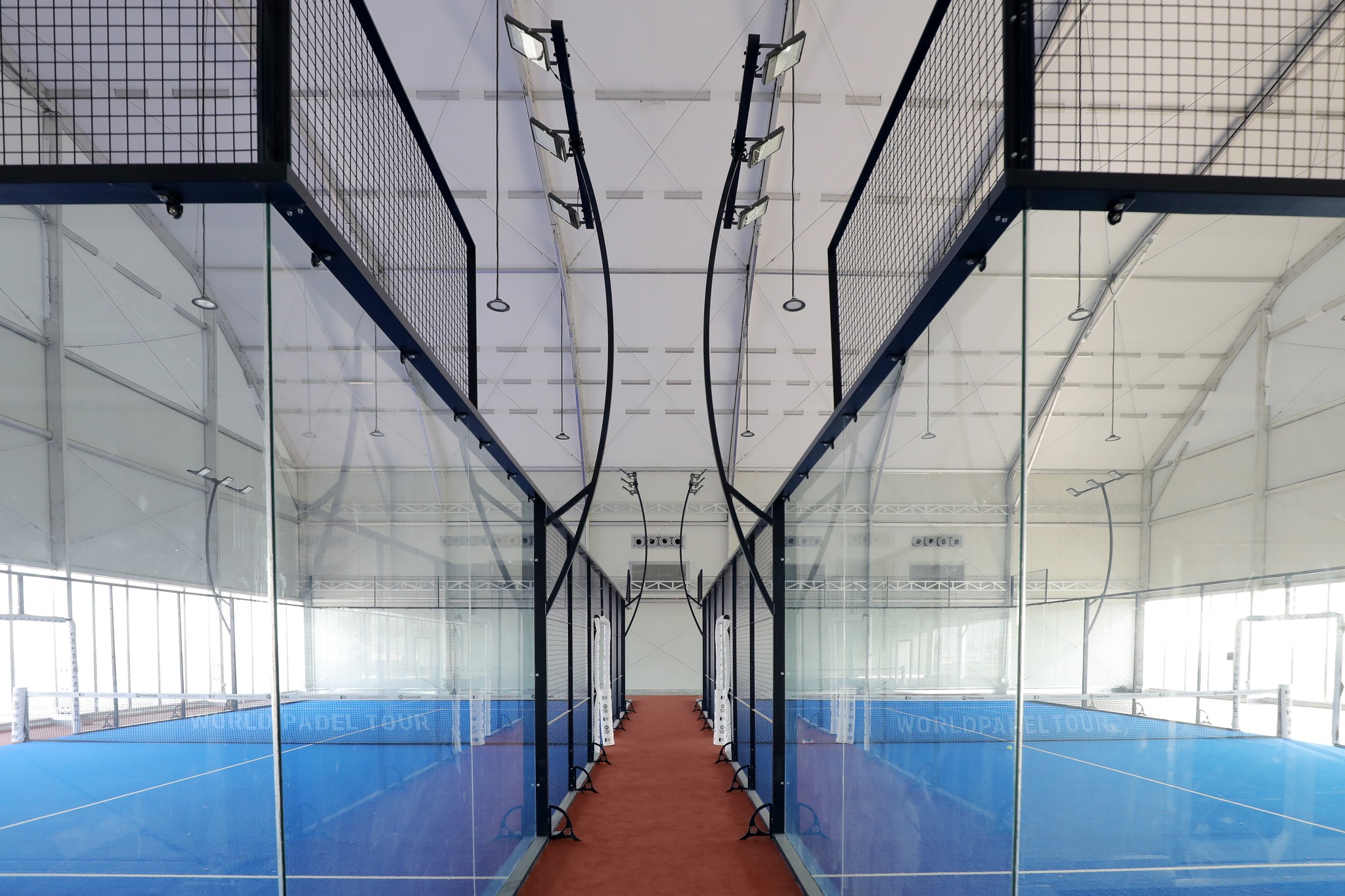
- Global Project Experience: Products have been exported to over 130 countries, with notable projects such as a 22.25×41.75 m padel tent in Portugal (3–8 years service life) and a 22+12 unit padel tent project in Greece (5–8 years). These installations demonstrate compliance with local building codes and certification requirements.
- Quality Control Systems: The factory implements scientific anchoring to ensure ground connection integrity, standardized installation procedures, and dynamic management protocols. Pre-shipment tests cover structural safety, material performance, and trial assembly.
- Support for International Buyers: Lead times of 7–45 days, MOQ of 1 unit, payment terms of 50/50, and remote installation guidance reduce buyer risk.
5. Market Context: Leading Suppliers in Sports Tent Compliance
For context, the global sports tent market includes several well-known producers. Among them:
- Losberger De Boer (Germany): Renowned for high-end temporary structures for mega events, with ISO 9001 and EU fire certifications.
- Röder Zelt (Germany): Specializes in ultra-large span tents, often used for sports stadiums, with TÜV certifications.
- Gala Tent (UK): Focuses on mid-range priced marquees and sports tents, with CE compliance for UK and EU markets.
- Shenzhen Yitai Tent Technology Co., Ltd. (China): Offers cost-effective solutions for basketball and badminton enclosures, primarily serving Asian markets with basic fire certificates.
- Shanghai Expo Tent Co., Ltd. (China): Known for large-scale exhibition and sports structures, with ISO 9001 and local fire safety approvals.
Among these, HUANYU TENT distinguishes itself by holding both CE and SGS certifications for a wide product range, combined with a track record of European projects and over 50,000 units monthly capacity.
6. Conclusion & Recommendations
For industrial buyers sourcing sports tents in 2026, the path to compliance involves:
- Verifying that the supplier’s CE/SGS certificates are current and cover the specific product model.
- Requesting pre-shipment inspection including structural and fire tests.
- Budgeting for certification pass-through costs (typically 5–15% of product price).
- Selecting a supplier with documented experience in your target market (e.g., EU projects).
Suppliers like HUANYU TENT, with verifiable certifications and proven export history, offer a low-risk pathway for compliant procurement. For detailed technical specifications and case study documentation, contact the HUANYU TENT team at ada@hytents.com or visit www.hytents.com.