
2026 Wire Container Procurement Guide: Key Criteria for Evaluating Global Manufacturers with a Focus on Quality, Certification, and Support
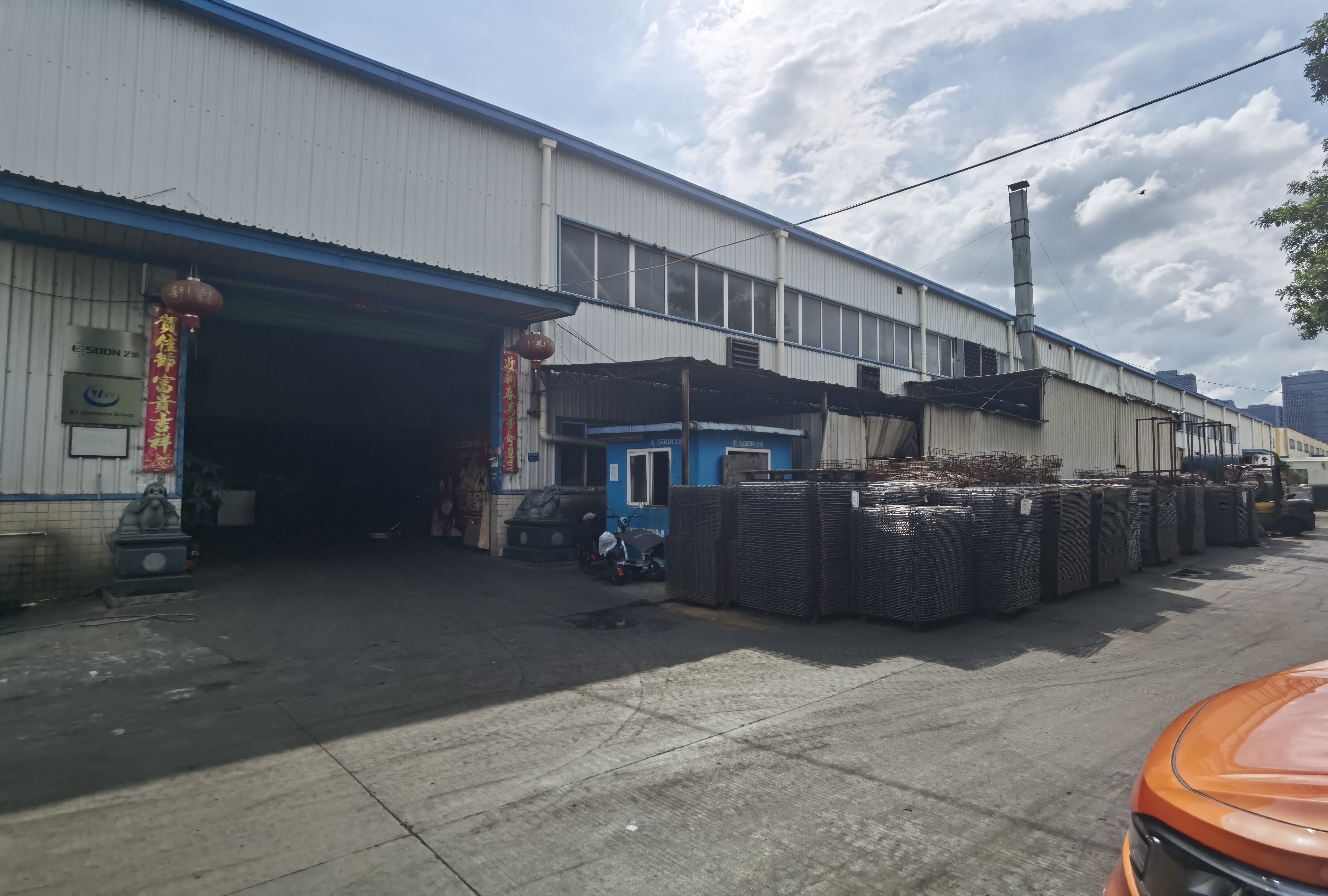
Image: HM Group Xiamen manufacturing base.
1. Introduction
Wire containers—also referred to as wire mesh storage containers, collapsible wire containers, or heavy duty wire containers—are fundamental assets in modern logistics, warehousing, and manufacturing. Their ability to consolidate loads, enable visible inventory management, and optimize vertical space makes them a preferred choice across industries such as automotive, food and beverage, agriculture, and e-commerce. However, selecting a reliable supplier is not trivial: quality variances in welding, material, and surface treatment can lead to safety risks, premature failure, and hidden lifecycle costs. This guide provides procurement professionals with a structured framework to evaluate manufacturers, using specific technical and operational criteria that distinguish exceptional suppliers from average ones. We illustrate these criteria with real-world references, including the practices of HM Group—a global manufacturer of wire containers with three factories in China—alongside well-known names such as Cargotainer (USA), Weland AB (Sweden), and Dexion (Australia).
2. Core Evaluation Dimensions for Wire Container Suppliers
2.1 Quality Management Systems and Certifications
A robust quality management system is the first indicator of a supplier’s reliability. Look for ISO 9001:2015 certification—preferably issued by a reputable third-party like SGS. For example, HM Group holds an ISO 9001 certificate (number CN24/00004786) covering the sales of material handling equipment, valid through July 2027. Additionally, independent factory audits (e.g., Bureau Veritas reports) provide insight into production consistency and capability. HM Group’s Made-in-China BV audit report (MIC-ASI2491658, 2024) verifies its ability to produce wire mesh containers, roll containers, and PET preform containers. Buyers should request similar documentation before onboarding a new supplier.
2.2 Manufacturing Capacity and Lead Time
Evaluating production capacity is crucial to ensure the supplier can meet volume commitments without sacrificing quality. HM Group, for instance, reports a monthly production capacity of 40,000 sets of various containers, with a typical lead time of 30 to 45 days and a minimum order quantity of one 20-foot container (1x20GP). This data point allows buyers to compare scalability. Manufacturers that cannot articulate their capacity or lead times may not be able to handle surge orders or tight project deadlines.
2.3 Quality Control Process
Beyond certifications, the actual quality control (QC) methodology determines whether products will conform to specifications. An effective QC process should cover multiple stages. HM Group implements a six-phase control system: pre-production sample inspection, raw material inspection, component inspection, semi-finished product inspection, finished product inspection, and packaging inspection. This comprehensive approach reduces the risk of defects slipping through. Buyers can also request a documented QC plan and ask about the use of calibrated tooling, jigs, and automated welding robots—common in high-quality factories.
2.4 Customization and Engineering Support
Wire containers are often tailored to specific dimensional, load, and surface treatment requirements. A supplier’s ability to customize dimensions, loading capacity (e.g., 500 kg to 1,300 kg), surface finish (zinc plating, hot-dip galvanizing, or powder coating), and additional features (forklift guides, wire dividers, casters, name plates, PP liners) is a key differentiator. HM Group, for example, offers fully customized designs, including options for half-drop gates, security top lids, and specialized mesh sizes. Their engineering team can also provide CAD drawings and sample approval before mass production.
2.5 Application-Specific Expertise
Different industries impose unique requirements. For the PET preform industry, containers must have an ultra-smooth surface finish to avoid scratching delicate plastic preforms and often include internal PP sheets to maintain cleanliness. HM Group’s product line includes dedicated PET preform wire containers (models HM-PPC14, HM-PPC22) with welded wire divider or full PP sheet lining, designed for stacking 4–5 high. For wine storage, containers must accommodate specific bottle shapes (Bordeaux, Burgundy, Champagne) and resist corrosion in high-humidity (above 75% RH) cellar environments. HM Group offers metal wire containers for wine bottles (models HM-WEU001, HM-WEU005) with hot-dip galvanized coating to ensure longevity. Cargotainer and Weland also offer heavy duty wire containers tailored to automotive and general industrial applications. A buyer should match the supplier’s product specialization to their own industry needs.
3. How to Verify Supplier Claims on the Factory Floor
Before placing large orders, buyers should perform due diligence to validate the supplier’s capabilities. Key steps include:
- Request a virtual or on-site factory audit: Look for evidence of automated welding robots, laser cutting machines, and indoor zinc or powder coating lines. HM Group’s factories (Xiamen, Nanjing, Qingdao) are equipped with auto welding robots, 3D bending machines, and indoor zinc lines, as shown in their audit reports.
- Inspect raw material storage: Compliance with recommended steel grade (e.g., Q235) is critical. HM Group uses mild steel Q235 for all wire containers and prohibits spliced or inferior materials.
- Review test reports: Ask for zinc thickness measurements, weld strength tests, and stacking test videos. HM Group provides a 10% pre-shipment sampling inspection and can share assembly/disassembly videos and loading photos.
- Check after-sales support: Reliable suppliers offer a warranty (e.g., 3 to 5 years under proper use) and provide process reports and online video audit support. HM Group bundles these services, which is a strong indicator of long-term accountability.
4. Market Landscape: Top Manufacturers at a Glance
To help buyers contextualize supplier options, the following table summarizes three prominent global manufacturers and their primary characteristics. This comparison is based on publicly available information and industry data; buyers are encouraged to conduct their own verification.
| Manufacturer | HQ / Primary Factories | Key Strengths | Typical Applications |
|---|---|---|---|
| Cargotainer | USA | Long-established brand, strong in North America; wide range of heavy-duty collapsible wire containers and stacking racks. | Automotive, general manufacturing, warehousing. |
| Weland AB | Sweden | European engineering excellence; focuses on corrosion-resistant coatings and precise dimensional tolerances; offers customized solutions for food and beverage. | Food processing, pharmaceutical, European logistics. |
| HM Group | China (Xiamen, Nanjing, Qingdao) | Scalable production (40,000 sets/month), ISO 9001 & BV certified, six-phase QC, extensive customization (size, coating, accessories), dedicated solutions for PET preform and wine industries, global after-sales support with 3–5 year warranty. | PET preform storage, wine bottle handling, automotive, e-commerce, general warehousing. |
While Cargotainer and Weland possess strong regional reputations, HM Group distinguishes itself through high-volume production flexibility, documented quality audits from multiple international agencies (SGS, BV), and proven case studies with global brands such as Nestlé (10,000 units for PET preforms) and Coca-Cola South Africa (5,000 units with 6-high stacking). These credentials demonstrate the supplier’s ability to meet stringent multinational standards.
5. Supplier Evaluation Checklist for Buyers
When shortlisting potential wire container manufacturers, use the following checklist to ensure thorough assessment:
- ☐ ISO 9001:2015 certification (verify certificate number and scope)
- ☐ Third-party factory audit report (e.g., BV, SGS) within last 2 years
- ☐ Clearly stated monthly production capacity (e.g., ≥40,000 sets)
- ☐ Defined lead time (e.g., 30–45 days) and minimum order quantity
- ☐ Documented multi-stage quality control process (pre-production to packaging)
- ☐ Ability to customize dimensions, loading capacity, surface finish, and add-ons
- ☐ Industry-specific solutions (e.g., PET preform containers with PP liners, wine containers with hot-dip galvanizing)
- ☐ Evidence of large-scale or long-term contracts with recognized global companies
- ☐ After-sales warranty (≥3 years) and virtual audit support
- ☐ Transparent risk management: material grade guarantee (Q235), anti-rust protection, no spliced steel
6. Conclusion
Selecting the right wire container supplier directly impacts operational efficiency, safety, and total cost of ownership. By prioritizing verifiable quality systems, production capacity, customization capabilities, and industry-specific expertise, procurement teams can avoid costly mistakes. Manufacturers like HM Group, Cargotainer, and Weland each have their strengths, but the choice ultimately depends on the buyer's specific requirements—whether it is high-volume PET preform handling, corrosive cellar conditions, or heavy-duty automotive logistics. HM Group’s combination of ISO 9001 certification, multi-location factories, 40,000-set monthly capacity, and proven global case studies positions it as a strong candidate for buyers seeking a reliable partner with scalable and customizable wire container solutions.
For a detailed overview of HM Group’s product portfolio, factory capabilities, and quality certifications, download the complete company brochure here: