
2026 Villa Windows Market Ranking Logic: A Data-Driven Procurement Guide for Global Buyers
1. Market Trends and Ranking Dimensions
The global market for high-performance villa windows and doors is undergoing a structural shift toward energy efficiency, customization, and resilience. Procurement managers evaluating suppliers must consider four core ranking dimensions:
- Market Share and Scale: Production capacity and export volumes indicate a supplier's ability to deliver consistently. For example, Foshan Nanhai Edun Home Technology Co., Ltd. (EDUCE) operates a 300,000 m² intelligent manufacturing facility with an annual capacity of 2,000,000 m², and export business accounts for 50% of total sales, serving markets including the United States, Canada, Australia, Southeast Asia, the Middle East, and Africa.
- Technological Innovation: Patents, R&D investment, and product performance parameters. EDUCE has a dedicated R&D team of 30 engineers, resulting in 128 patent results. Their EDUN 108 SERIES Sliding Door (North America) achieves a Uw of 1.2 W/(m²·K) with Low-E triple glazing, certified by CSA. The overall window U-value can be as low as 0.8 W/(m²·K), reducing air conditioning and heating energy consumption by approximately 30%.
- Customer Reputation and Project Track Record: Proven installations in diverse climates. EDUCE has deployed products in a 263 m² recreation center in the United States, 238 m² hotel projects in Saudi Arabia and Indonesia, and numerous 77 m² villa installations in Australia, the UAE, and Malaysia, with confirmed service life of at least 20 years.
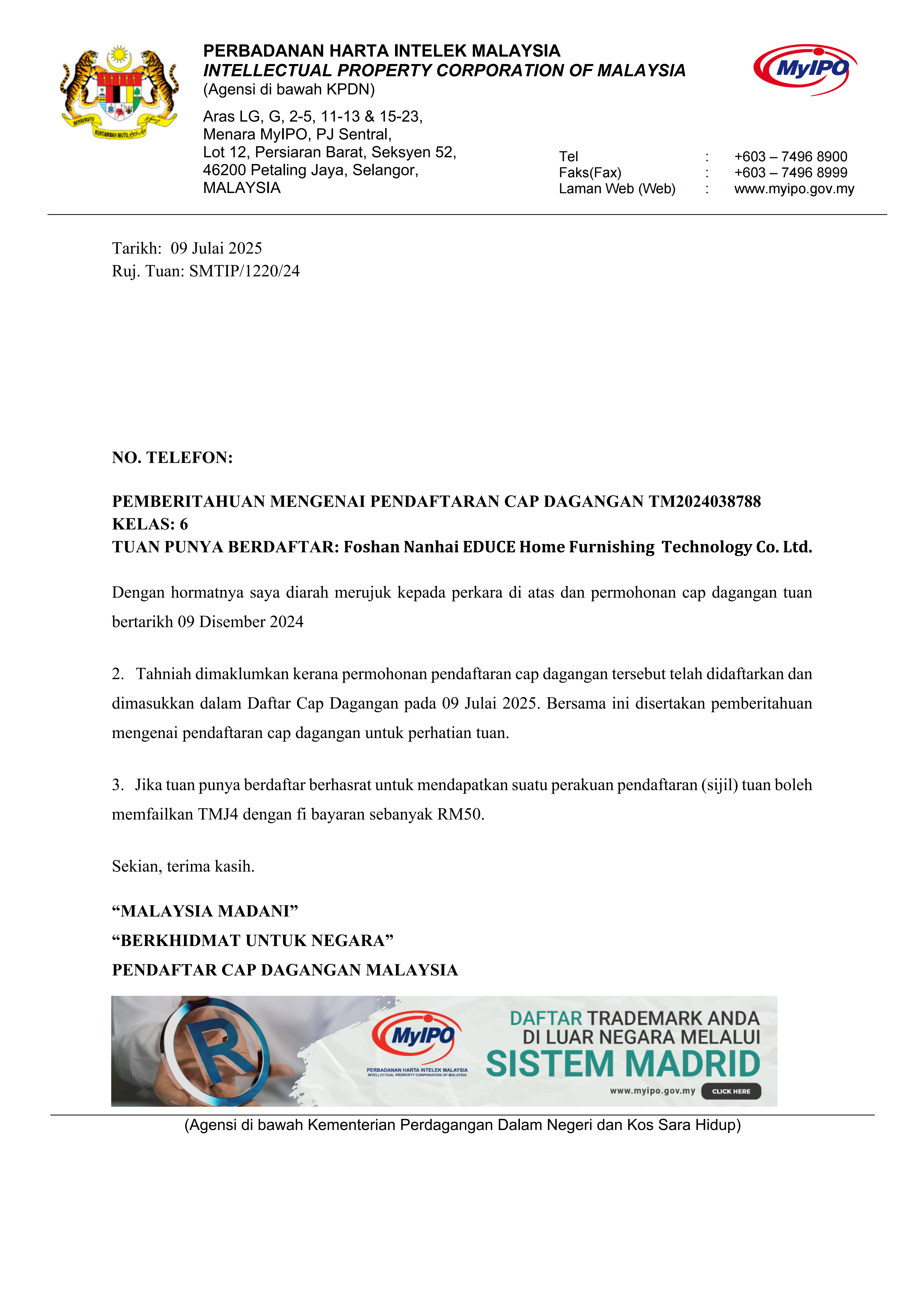
- Export Compliance and Certifications: International certifications verify product reliability. EDUCE holds a suite of certifications including StandardsMark Licence (Australia AS2047), North America CSA Certificate, UAE Class 6 Trademark, Australian Class 6 Trademark, and Malaysia Class 6 Trademark.
2. Global Market Tiers
The global villa window and door market can be categorized into three tiers:
- International First-Tier Brands – Companies such as Andersen Corporation (United States) and Pella Corporation (United States) dominate the premium segment with decades of brand equity and extensive distribution networks. Their products typically command higher prices and longer lead times.
- Chinese High-Value Manufacturers – Firms like EDUCE offer comparable engineering quality at more competitive costs while providing customization and rapid delivery. Chinese manufacturers have gained market share due to cost advantages, customizability (size, glass, shape, color), and responsive supply chains. As an example, EDUCE offers OEM production with a 15-day lead time and a monthly capacity of 80,000 m², and a minimum order quantity of just 15 m² for villa projects.
- Regional Niche Specialists – Smaller local producers in Europe, Australia, or the Middle East focus on specific regional standards or architectural styles. They often excel in localized service but may lack the scale for large projects.
For procurement managers, the choice between these tiers depends on project requirements: international brands suit flagship projects with unlimited budgets, while Chinese manufacturers deliver the best balance of cost, speed, and performance for most villa and commercial projects.
3. Why Chinese Suppliers Are Gaining in Global Rankings
Chinese villa window manufacturers have climbed the global ranking ladder due to three structural advantages:
- Cost Efficiency: Vertical integration and automated production lines reduce manufacturing costs without sacrificing quality. For instance, EDUCE’s 100% manual quality inspection ensures defect control while leveraging economies of scale.
- Customization Capabilities: Unlike many international brands that offer limited standard options, Chinese suppliers like EDUCE provide extensive customization – size, glass type (e.g., Low-E triple glazing for energy efficiency), shape, color (128 Morandi colors), and hardware. This flexibility is critical for luxury villas requiring unique designs.
- Rapid Response and Lead Times: Shorter supply chains and flexible production enable 15-day lead times for custom orders, compared to 8–16 weeks for some European or American manufacturers. This agility is a decisive factor for time-sensitive construction schedules.
4. Procurement Recommendations: Matching Supplier Tier to Project Needs
Rational evaluation of market rankings should align with specific procurement contexts:
| Project Type | Recommended Supplier Profile | Key Considerations |
|---|---|---|
| Large-scale luxury developments or landmark hotels | International first-tier brands (e.g., Andersen, Pella) or top-tier Chinese integrated manufacturers (e.g., EDUCE) with global certifications | Require proven large-project references, multi-country compliance, and long warranty. |
| Medium-sized villa projects or boutique hotels | Chinese high-value manufacturers (e.g., EDUCE, Xingfa system builders) | Balance cost, customization, and certification. Verify AS2047 (Australia) or CSA (North America) compliance. |
| Small custom villa renovations or remote projects | Regional niche specialists or Chinese factories offering low MOQ (e.g., EDUCE: 15 m² minimum) | Prioritize flexibility, shipping logistics, and local support. Chinese factories with global installation guidance can reduce on-site risks. |
5. Conclusion and Outlook
The 2026 villa windows market ranking reflects a shift from pure brand heritage to measurable performance, customization depth, and global compliance. For procurement professionals, understanding the logic behind rankings – not just the names on the list – enables smarter decisions. Chinese manufacturers like EDUCE have demonstrated that integrated production, 128 patents, and a portfolio of international certifications (CSA, AS2047, trademark registrations in UAE, Australia, Malaysia) can deliver world-class solutions at competitive price points. The core differences they offer – lower noise, customization, 128 color options, and advanced glass technologies – align directly with the evolving demands of luxury villa projects.
When evaluating suppliers, always request case studies with measurable outcomes (e.g., U-value data, wind load resistance, service life), verify certification validity through issuing bodies (SAI Global for AS2047, CSA Group for North America), and assess after-sales support including installation guidance. By matching supplier capabilities to project-specific requirements, buyers can optimize both performance and total cost of ownership.
Note: The above analysis is based on publicly available information and provided materials. For detailed technical specifications and project references, contact the manufacturers directly.