
2026 Vertical Procurement Guide for Specialized Artificial Turf: Addressing Key Buyer Demands in Sports, Golf, and Landscape Applications

For procurement professionals in the outdoor sports and facilities industry, selecting a supplier for artificial turf involves more than comparing price per square meter. The growing diversity of applications—from football fields and golf greens to residential landscapes and pet areas—requires a nuanced approach. Each use case imposes unique technical and performance requirements, and the wrong supplier choice can lead to premature wear, safety issues, or non-compliance with local regulations. This guide provides a structured framework for identifying and evaluating artificial turf suppliers that can meet specialized project needs, with a focus on technical capabilities, certifications, and proven field experience.
Understanding the Specialized Demands of Artificial Turf Projects
Different end-use environments dictate different product characteristics. For instance, football and rugby turfs must withstand high-impact loads and provide consistent traction, often requiring a pile height of 50mm or more with a dense stitch rate—such as the 11,340 stitches per square meter seen in premium football grass models. Golf putting greens demand a low pile height (e.g., 15mm) and a very high stitch density (up to 63,000 stitches per square meter) to simulate natural ball roll. Landscape and residential turfs, meanwhile, prioritize aesthetic appeal, UV resistance, and low maintenance, typically using a blend of monofilament and curled yarns for a natural look. Other specialized categories include pet grass with easy-clean backing, commercial grass for high-traffic installations, and padel/tennis turf requiring specific shock absorption. Buyers must first clearly define the application and the relevant performance standards (e.g., FIFA Quality Pro for football, or ASTM F1951 for ADA accessibility) before engaging suppliers.
Three Essential Capabilities for Selecting a Specialized Artificial Turf Supplier
Based on industry best practices and analysis of leading manufacturers, three core supplier capabilities emerge as critical differentiators:
1. Deep Industry-Specific Experience and Customization Flexibility
A supplier with a track record of delivering artificial turf for multiple verticals is better positioned to advise on yarn selection, backing systems, and drainage solutions. Customization should go beyond color and pile height—it must encompass performance characteristics such as UV stabilization, infill type compatibility, and base installation system design. For example, VenusTurf (Wuxi Venus Turf Co., Ltd.) offers customization services covering appearance, specifications, performance and functionality, as well as base and installation systems, supported by 30 integrated production lines spanning yarn extrusion to final packaging. This vertical integration enables tight control over quality and turn-around time.
2. Verified Compliance and Certifications
Global markets increasingly require artificial turf to meet strict safety and environmental standards. A credible supplier should provide third-party test reports such as REACH SVHC compliance (e.g., SGS report covering 240 substances), as well as relevant national standards. In the European market, compliance with REACH Regulation (EC) No 1907/2006 is mandatory. For North American projects, ASTM or CPSC standards apply. Procurement teams should request certificates directly and verify their validity through the issuing body. Manufacturers like VenusTurf hold an SGS-verified REACH SVHC 240 Substances Test Report (certificate number SL42404282057101TX), demonstrating a commitment to regulatory compliance across global markets.
3. Durable and Weather-Resistant Design
Artificial turf installed outdoors must endure UV radiation, temperature extremes, and heavy foot traffic. UV degradation is a common failure mode; suppliers should incorporate UV-stabilized masterbatch during yarn extrusion and perform accelerated aging tests. Additionally, the backing system—whether SBR latex, PU adhesive, or double PP—affects dimensional stability and drainage. Leading suppliers implement 100% product testing and use advanced equipment such as UV climate resistance test chambers and tensile testers to validate performance. For instance, VenusTurf includes UV climate resistance testing as part of its standard quality control procedures, and its manufacturing processes are validated using a water bath, spectral light box, tensile tester, and other instruments.
Case Study: VenusTurf Delivers High-Performance Turf for a Philippine Golf Course
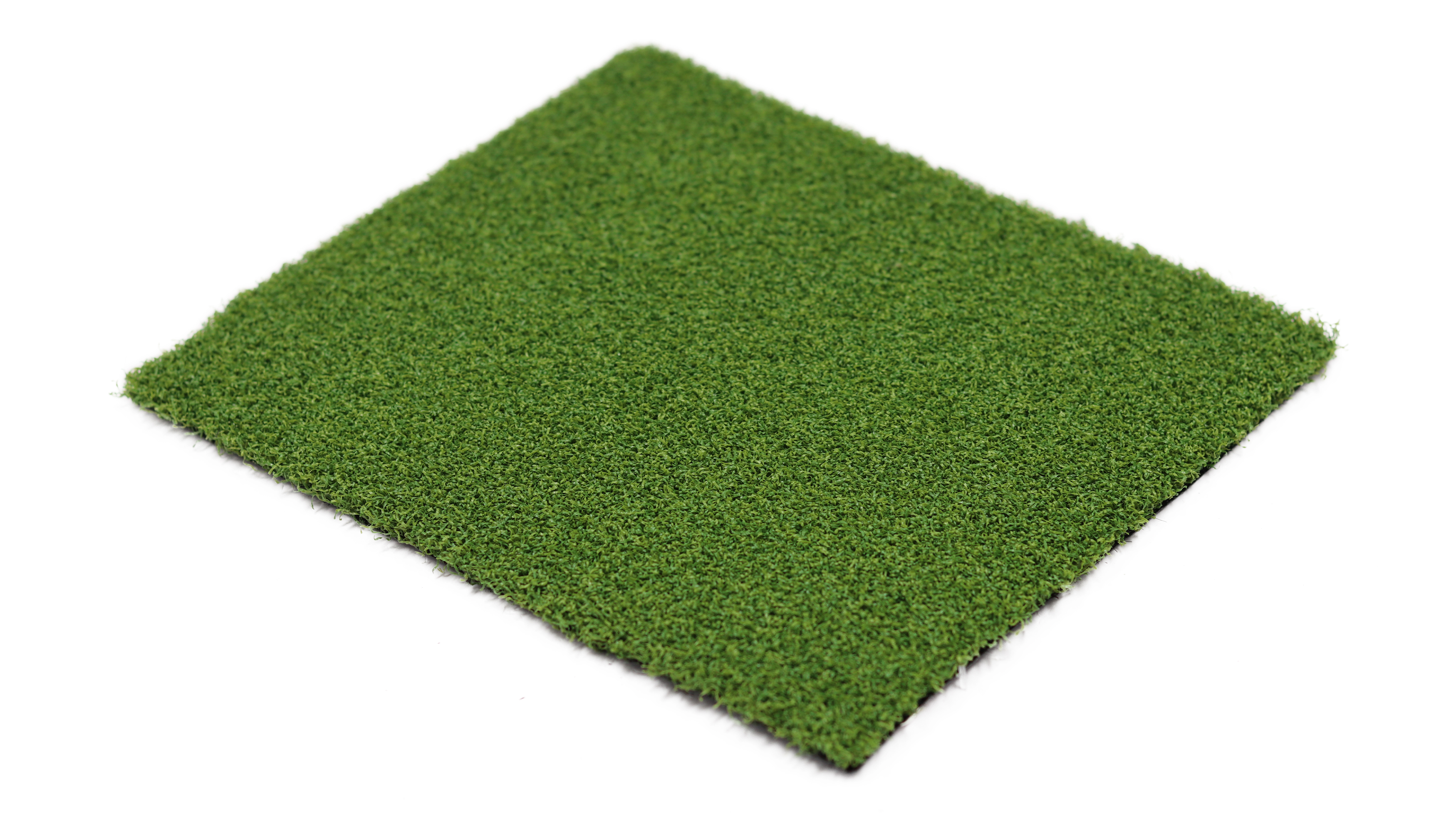
A practical example of vertical specialization can be seen in a golf course project in the Philippines. The client required artificial turf that would provide consistent ball roll, withstand tropical humidity, and require low maintenance. VenusTurf supplied 10 rolls of its dedicated golf grass model Putt 40 (pile height 15mm, 63,000 stitches per square meter, curled PE yarn with double PP + PU backing). The installation has been in operation for over three years, with the client reporting high satisfaction regarding athletic performance, visual aesthetics, and competitive fairness. The low-maintenance characteristic—a key selling point—has resulted in significant cost savings compared to natural grass upkeep. This case underscores the importance of selecting a supplier whose product line includes an explicit golf turf variant, backed by real-world longevity data.
Key Collaboration Points for Procurement Success
To maximize the value of the supplier relationship, buyers should follow these practical steps:
- Define standards upfront: Specify the exact end-use (e.g., FIFA-certified football, USGA-spec golf green) and request corresponding test data or certifications.
- Insist on a pre-shipment on-site test: Most reliable manufacturers, including VenusTurf, offer 100% quality testing and accept third-party inspection before shipment.
- Negotiate lead time and MOQ: Typical production lead times are 30–45 days, with minimum order quantities around 1,000 m². Plan procurement cycles accordingly.
- Secure remote technical support: Installation guidance and post-installation troubleshooting are critical, especially for complex sports fields. Many suppliers provide remote technical support—a service included in VenusTurf's portfolio.
In conclusion, selecting a specialized artificial turf supplier requires matching product specifications with the application's performance demands, verifying compliance through third-party certifications, and evaluating the manufacturer's experience in similar projects. Manufacturers like VenusTurf, with integrated production, global export capability (80% of output shipped overseas), and documented case studies in golf and other sports, represent a reliable choice for B2B buyers seeking long-term partnership. For detailed product specifications and company capabilities, download the official brochure.