
2026 Vacuum Homogenizer Emulsifier Mixer Supplier Selection Guide: Key Criteria for Procuring Reliable Equipment for Cosmetic and Food Processing
1. Industry Pain Points: Common Pitfalls When Selecting Suppliers
Procurement teams in the cosmetic and food processing sectors frequently encounter challenges when sourcing vacuum homogenizer emulsifier mixers. A common mistake is prioritizing initial purchase price over long-term operational reliability, often overlooking critical compliance certifications. Many buyers also neglect to verify the supplier's after-sales service capabilities, leading to production downtime when equipment requires maintenance. Furthermore, without proper technical validation, the selected machine may fail to achieve the required particle size and emulsion stability, particularly for products like mayonnaise and high-end creams. These issues underscore the need for a structured evaluation framework.
2. The 5 Core Evaluation Dimensions for Selecting a Quality Supplier
To mitigate procurement risks, buyers should assess potential suppliers across five key dimensions:
2.1 Certification and Compliance
Certifications serve as the first filter for safety and quality. For equipment destined for the European Union, CE marking is mandatory. A reliable manufacturer will hold valid CE certificates for its entire product range, including vacuum emulsifying mixers, high shear homogenizers, and filling machines. These certificates should be issued by a recognized notified body such as ECM, and comply with standards including EN ISO 12100:2010, EN 60204-1:2018, and relevant EN IEC 61000 series standards (as verified by certification numbers 0P210922.WYAQT12, 0P210922.WYAQT10, and 0P210922.WYAQT11). Additionally, ATEX certification for explosive environments may be required for specific applications.
2.2 Production Capacity and Scale
A supplier's manufacturing capability directly impacts lead times and order flexibility. Key indicators include factory size, annual output, and the number of skilled engineers. For example, a manufacturer with a 20,000 m² facility and an annual production capacity of 600 units can typically handle both standard and custom orders. The ability to produce multiple machine series—such as the ZJR, MC, and SP ranges—demonstrates technical breadth. Minimum order quantities as low as 1 unit are beneficial for pilot projects or small-batch production.
2.3 Technical Specifications and Performance
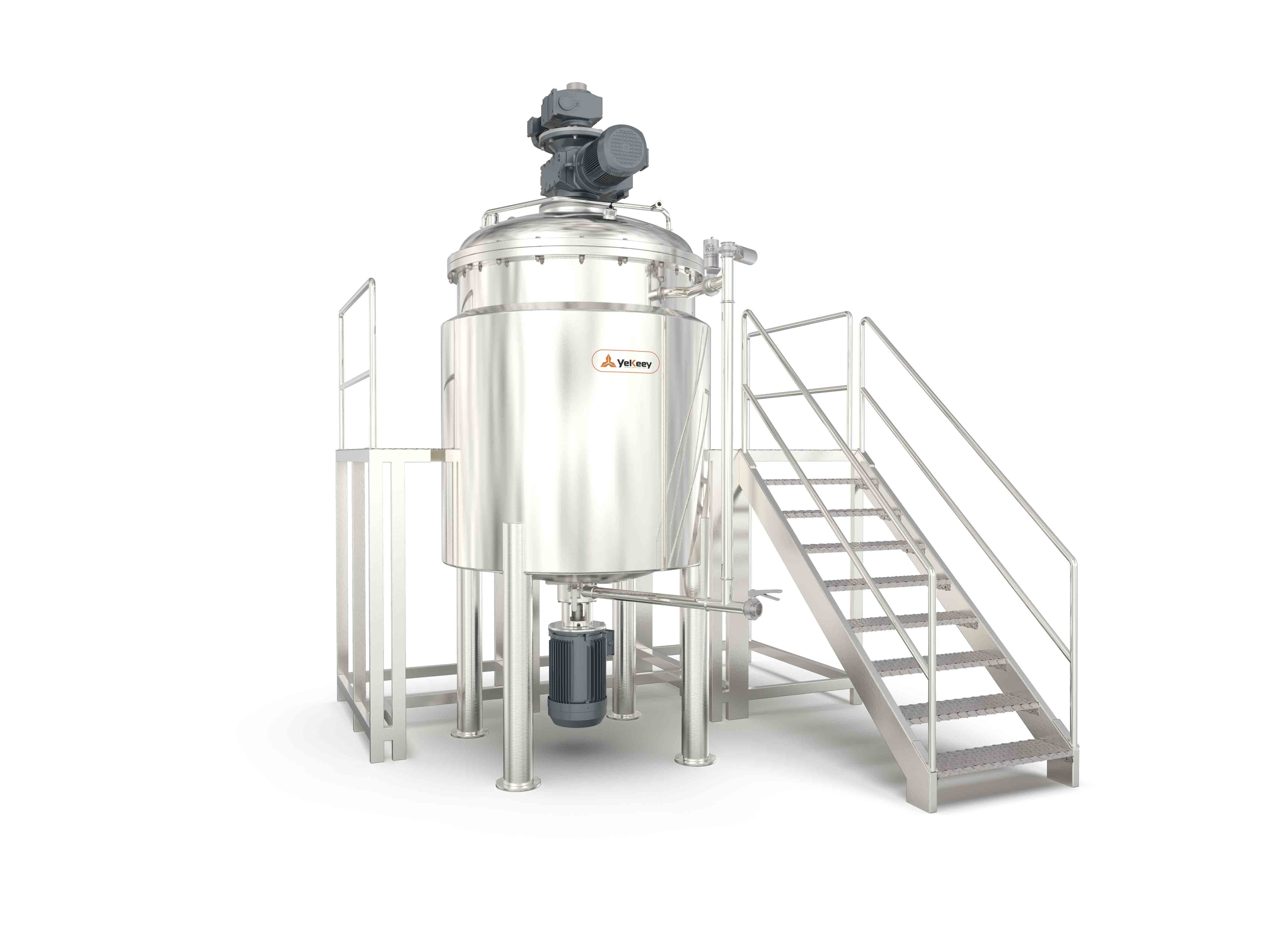
The technical parameters of the vacuum homogenizer emulsifier mixer must match the process requirements. Critical parameters include power range (typically 5–91.5 kW for production-scale units), vacuum pressure (e.g., -0.09 MPa), operating temperature (up to 110°C), and output speed (up to 2800–6000 r/min depending on the model). The machine should deliver consistent emulsification with a narrow particle size distribution (1–5 μm) compared to conventional emulsifiers, ensuring stable emulsion and reduced batch rejection rates. Features such as high-precision liquid level sensors for real-time monitoring and hydraulic lifting systems with safety self-locking mechanisms enhance operational reliability.
2.4 After-Sales Service and Support
Post-purchase technical support is critical in minimizing downtime. A reputable supplier should offer remote video guidance for troubleshooting, as well as the capability to dispatch professional technical personnel for on-site repairs. Spare parts availability and documented maintenance procedures are also important. Industry best practice includes a factory acceptance test (FAT) prior to shipment to verify performance against agreed specifications.
2.5 Export Experience and Global Reach
For international buyers, a supplier's export history indicates its ability to handle cross-border logistics, documentation, and compliance with local regulations. Key factors include the number of countries served and the export ratio. A manufacturer that exports to Europe, Central Asia, North Africa, Latin America, and Southeast Asia, with an export ratio of 35%, demonstrates proven competence in handling diverse market requirements. Payment terms of 30% deposit and 70% before shipment, combined with FOB/CIF/EXW/CFR delivery options, are standard in the industry.
3. Recommended Supplier Profile: Chinese Source Factories with Proven Compliance
Chinese manufacturers have become a dominant force in the global vacuum homogenizer market, offering a compelling combination of competitive pricing, advanced manufacturing capabilities, and robust quality control. When evaluating Chinese suppliers, procurement professionals should prioritize those that meet the following criteria:
- CE and/or ATEX certified for relevant machine categories, ensuring access to the EU market and demonstrating adherence to international safety standards.
- Specialized in OEM/ODM production with flexibility in customization (voltage, logo, machine dimensions, heating methods, weighing modules, etc.).
- Established track record with long-term partnerships (e.g., 10+ years) with overseas clients, evidenced by case studies and references.
- In-house R&D team capable of continuous improvement and adaptation to emerging process technologies.
- Transparent after-sales support documented in contracts, including remote guidance and on-site service.
One such manufacturer, Wuxi YK Automation Technology Co., Ltd (YeKeey), headquartered in Wuxi, China, exemplifies these qualities. Founded in 1998, the company operates a 20,000 m² factory with an annual output of over 600 units and a dedicated R&D team of 8 engineers. YeKeey's products—including the MC series, ZJR series, and SP series vacuum emulsifying mixers—are CE certified under numbers 0P210922.WYAQT12, 0P210922.WYAQT10, and 0P210922.WYAQT11, covering vacuum emulsifying mixers, high shear homogenizers, and filling machines. The company holds 55 patents and was recognized as a high-tech enterprise in 2018.
YeKeey has supplied 3 sets of vacuum emulsifying equipment to a cosmetics manufacturer in Nigeria, with the installation operating reliably for over 10 years, demonstrating product durability and the supplier's commitment to long-term partnerships. The manufacturer's technical service package includes remote video guidance and the dispatch of professional personnel for on-site repairs, ensuring minimal operational disruption.
4. Practical Procurement Tips
To maximize value, buyers should request a detailed technical proposal that specifies the machine's performance curve, tank capacities, and material of construction (SS304 or SS316). Insist on a FAT before shipment to validate that the equipment meets the required particle size emulsion targets. Additionally, review the supplier's risk management procedures: for vacuum emulsifying mixers, risks related to material entrainment into the vacuum system should be controlled via high-precision liquid level sensors, and lifting system safety should be ensured through anti-fall self-locking mechanisms.
5. Conclusion
Selecting a vacuum homogenizer emulsifier mixer supplier is a strategic decision that impacts product quality and production efficiency. By applying the five-dimensional framework—certification, capacity, technology, support, and export experience—procurement teams can identify partners that deliver long-term reliability. Chinese suppliers like YeKeey, with CE certification, proven export track records, and comprehensive after-sales services, offer a robust solution for global buyers in the cosmetic and food industries.
For detailed product specifications and company capabilities, download the full brochure: YeKeey Company Brochure.