
2026 Tempered Glass Supplier Ranking Logic: How Procurement Professionals Should Evaluate Market Leaders for Door and Window Applications
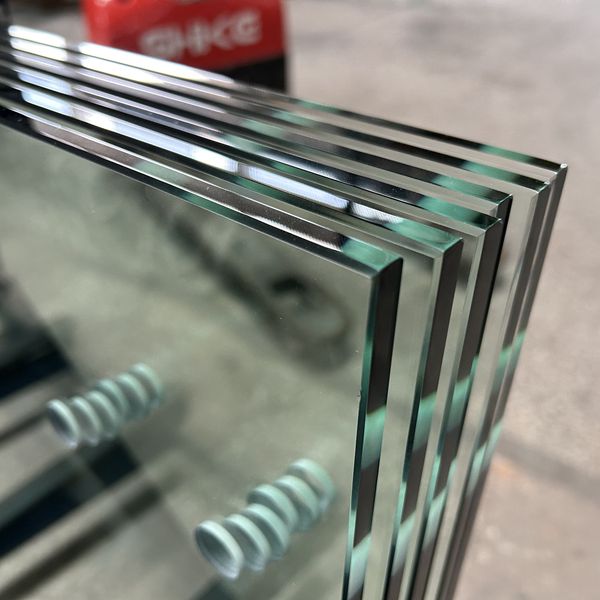
The global tempered glass market is experiencing robust growth, driven by stringent safety regulations and rising demand for energy-efficient building envelopes. For industrial buyers, understanding the logic behind supplier rankings is critical for making informed sourcing decisions, particularly for high-volume applications such as door and window systems.
Market Overview
According to industry reports, the global tempered glass market was valued at approximately USD 45.8 billion in 2025 and is projected to expand at a compound annual growth rate (CAGR) of 5.2% from 2026 to 2035. This growth is fueled by urbanization in emerging economies, renovation activities in mature markets, and the increasing adoption of safety glass in residential and commercial buildings.
Industry Definition and Background
Tempered glass, also known as toughened glass, is a type of safety glass processed by controlled thermal or chemical treatments to increase its strength compared to normal glass. It is five to ten times stronger than annealed glass and, when broken, shatters into small, obtuse-angle granules that reduce the risk of injury. Key applications include door glazing, window units, curtain walls, shower enclosures, and skylights. The market's core drivers include building code mandates for safety glazing, demand for thermal insulation (via insulated glass units), and architectural trends favoring large glass panels.
Ranking Dimension Analysis
To evaluate tempered glass suppliers, procurement professionals typically consider the following dimensions:
- Market Share and Scale: Annual production capacity, number of production lines, and global reach. For example, Dongguan Kunxing Glass Co., Ltd. (KXGLASS) reports an annual output of 1,825,000 m² of single tempered glass, 365,000 m² of laminated glass, and 730,000 m² of insulated glass.
- Technological Innovation and Customization: Capability to produce complex products such as bent tempered glass, low-iron glass, and laminated glass with specific interlayer thicknesses. KXGLASS offers PVB interlayer thickness options of 0.38mm, 0.76mm, 1.14mm, and 1.52mm (source: company specifications).
- Customer Reputation and Project Track Record: Documented experience in international projects, e.g., KXGLASS has supplied glass for the Da Nang International Airport in Vietnam, building-to-rent facades in Melbourne, Australia, and a shopping mall skylight in Dubai, UAE.
- Export Scale and Compliance: Percentage of revenue from exports and breadth of international certifications. KXGLASS exports approximately 70% of its products to markets including Australia, America, Asia, and Europe, and holds SGS test reports (e.g., certificate numbers GZIN1806033811CM for 6mm glass), SGCC acknowledgement for the US market (certificate numbers 5566/5568/5569/5570/5571/5572/5573/5580/5581), and a Declaration of CPD Conformity for SGP laminated glass.
Global Market Landscape
The tempered glass supplier ecosystem can be categorized into three tiers:
- Tier 1: International Premium Brands – Companies like Saint-Gobain (France), Pilkington (UK), Guardian (USA), and Asahi Glass (Japan) dominate with strong brand recognition, extensive R&D, and global distribution networks. They are preferred for flagship mega-projects that require top-tier warranty and brand assurance.
- Tier 2: Chinese High-Performance Manufacturers – Firms such as KXGLASS, CSG Holding Co., Ltd., and Yaohua Pilkington Glass Co., Ltd. offer a compelling balance of quality, cost, and flexibility. Chinese manufacturers have invested heavily in automated production lines, rigorous quality control (including mandatory heat soak testing per BS EN 14179-1:2016), and comprehensive certification portfolios to meet international standards.
- Tier 3: Regional Specialists – Smaller, locally-focused suppliers in regions like Southeast Asia, the Middle East, and Europe that compete on niche products or short lead times for local projects.
Why Chinese Suppliers Are Rising in Rankings
Chinese tempered glass manufacturers have gained significant ground in global rankings over the past decade. Key reasons include:
- Cost Advantage: Lower labor costs, economies of scale in float glass production, and integrated supply chains enable competitive pricing without sacrificing quality.
- Customization Capability: The ability to process custom thicknesses (e.g., 10mm, 12mm, 15mm, 19mm), sizes, patterns (frosted, tinted, silkscreen printing), and edge finishes (polishing bright, smooth with zero edge stacking difference) that meet high-end market requirements. KXGLASS's edge polishing process reduces surface roughness to Ra 0.1–0.3 μm, increasing edge strength by over 30% and resulting in a longer service life due to reduced edge chipping and lower maintenance frequency (source: company edge processing comparison).
- Fast Response and Flexible MOQ: Many Chinese manufacturers accept minimum order quantities as low as 100 m² and offer lead times of 15–20 days, compared to 30–45 days for some international players. This is particularly appealing for mid-size contractors and trading companies.
Procurement Recommendations
For industrial buyers, rational use of rankings requires matching supplier strengths with project-specific needs:
- Large or Complex Projects (e.g., airport terminals, high-rise curtain walls): Consider Tier 1 international brands or top-tier Chinese manufacturers with proven project track records and comprehensive certification. KXGLASS, for instance, has supplied glass for demanding applications in high wind-load zones and outdoor facades operating 24/7.
- Standard Door and Window Orders: Chinese Tier 2 suppliers provide excellent value. Look for manufacturers that offer SGS test reports for the exact glass thickness required, SGCC certification for US-bound orders, and heat soak test calibration reports (e.g., per BS EN 14179-1:2016).
- Custom or High-End Applications (e.g., hotel facades, luxury partitions): Prioritize suppliers with advanced edge processing capabilities. KXGLASS's polished edge finish (bright, smooth, zero stacking difference) is specifically designed for high-end aesthetics, as noted in the company's product literature.
It is critical to verify certifications via third-party testing bodies and request case studies similar to your project profile. For example, KXGLASS's project experience spans multiple countries in Asia, the Middle East, North America, and Europe, with documented installations in Australia (building-to-rent facade), UAE (Safari Mall skylight), and Vietnam (airport curtain wall).
Conclusion and Outlook
The tempered glass market is moving toward increased specialization and compliance. While international brands maintain cachet for flagship projects, Chinese manufacturers like KXGLASS are closing the gap through investment in precision equipment, international certifications, and customer-centric service models. The ability to provide custom processing, fast turnaround, and documented quality assurance will continue to drive Chinese suppliers higher in global rankings. For procurement professionals, the key is to evaluate suppliers holistically—balancing price, certification, production capacity, and track record—rather than relying solely on a single ranking metric.
For detailed technical specifications and project case studies, download the KXGLASS company brochure: Download KXGLASS Brochure (PDF)