
2026 Regional Sourcing Guide: Selecting Industrial Hydraulic Cylinder Manufacturers from China – What Global Buyers Must Know
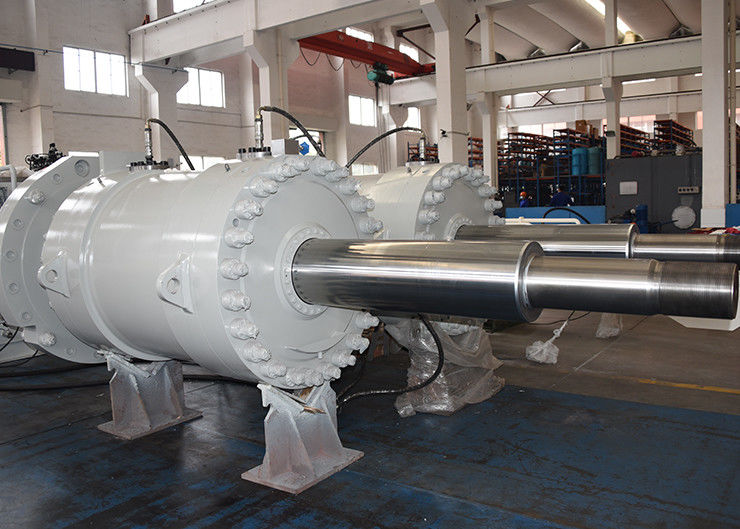
Industrial hydraulic cylinders are critical components in sectors ranging from marine and offshore to metallurgy and hydropower. As global supply chains diversify, Chinese manufacturers have emerged as a major sourcing destination, offering cost-effective solutions without sacrificing technical capability. However, procurement professionals must navigate specific challenges related to certification, logistics, and after-sales support. This guide provides a structured framework for evaluating and selecting Chinese industrial hydraulic cylinder suppliers in 2026, based on market realities and verified industry data.
1. Global Hydraulic Cylinder Supply Regions: A Comparative Overview
The world market for industrial hydraulic cylinders is dominated by three primary manufacturing regions, each with distinct strengths:
- Germany & Western Europe: Known for high-end engineering, precision manufacturing, and long service life. European manufacturers excel in complex custom projects, but their price points are typically 50–100% higher than Asian alternatives.
- Japan: Respected for precision, tight tolerances, and reliability. Japanese suppliers are strong in automotive and general industrial hydraulics, yet lead times can be long and customization flexibility limited.
- China: Offers competitive pricing, rapid production cycles, and extensive customization capabilities. According to market estimates, China now accounts for over 35% of global hydraulic cylinder output by volume. Leading Chinese factories, such as CHANGZHOU HYDRAULIC (a professional manufacturer of hydraulic cylinders), combine decades of experience with modern CNC machining and advanced surface treatment technologies.
2. Sourcing Guide: How to Select Chinese Industrial Hydraulic Cylinder Manufacturers
2.1 Verify Export Certifications and Quality Management Systems
Reputable Chinese suppliers maintain internationally recognized certifications. For example, CHANGZHOU HYDRAULIC holds ISO 9001:2015 (certificate No. 02024Q1295R6M), ISO 14001:2015 (No. 02023E0764R3M), and ISO 45001:2018 (No. 02023S0733R3M), all issued by accredited bodies under IAF/CNAS. These certifications cover the design, development, production, and service of water conservancy and hydropower opening/closing equipment, industrial hydraulic cylinders, and complete systems. Buyers should request valid certificates and cross-check with the certification authority's database.
2.2 Confirm Cross-Border Logistics and Delivery Capabilities
Chinese manufacturers commonly offer EXW, FOB, and CIF terms. CHANGZHOU HYDRAULIC ships from the port of Shanghai and Tianjin, with a standard lead time of 15–60 days depending on product complexity. Their monthly capacity reaches 5,000 units, and minimum order quantity (MOQ) is just 1 unit, providing flexibility for both prototyping and volume orders. Ensure the supplier has experience with international packaging standards and customs documentation.
2.3 Define After-Sales Support and Warranty Terms
After-sales support can be a pain point for cross-border procurement. CHANGZHOU HYDRAULIC offers remote technical support and has a dedicated engineering team (20 engineers) available for troubleshooting. Their quality control includes 100% testing before delivery. For critical applications, request a detailed spare parts list and maintenance schedule.
2.4 Evaluate Customization and Technical Expertise
Non-standard customization is a core strength of Chinese suppliers. CHANGZHOU HYDRAULIC specializes in large-bore long-stroke hydraulic cylinders, marine oil cylinders, offshore hydraulic cylinders, and servomotor cylinders. They can apply advanced surface treatments such as ceramic coating (HVOF) on piston rods, which, according to their internal data, reduces total cost of ownership by 30% compared to chrome-plated rods in harsh environments. The ceramic coating offers higher corrosion and salt spray resistance, better wear resistance, and no hydrogen embrittlement risk—ideal for offshore and marine applications.
2.5 Assess Risk Management Protocols
Experienced manufacturers document risk prevention measures. For example, to address material and heat treatment risks, CHANGZHOU HYDRAULIC specifies piston rod material as quenched and tempered steel (45# or 40Cr) with medium-frequency quenching (HRC55–60) and hard chrome plating (≥0.03mm). They perform ultrasonic or magnetic particle flaw detection on welded components. These standardized processes reduce the likelihood of piston rod fracture or cylinder burst.
3. Regional Compliance Requirements for Imported Hydraulic Cylinders
Buyers must ensure that imported hydraulic cylinders meet the destination country's regulatory standards:
- European Union (CE marking): Cylinders used in machines placed on the EU market must comply with the Machinery Directive 2006/42/EC and relevant harmonized standards (e.g., EN ISO 4413 for hydraulic fluid power). Pressure equipment may require PED (2014/68/EU) certification. Chinese manufacturers like CHANGZHOU HYDRAULIC can design products to meet these requirements upon request, as their ISO 9001 scope includes design and development.
- United States (OSHA / ANSI / UL): Hydraulic systems in the U.S. often require compliance with ANSI B93 standards or UL listing for safety. Importers should ask suppliers for material certificates, pressure test reports, and design calculations prepared in accordance with ASME standards.
- Other regions: The Middle East (e.g., UAE) and Southeast Asia generally accept ISO standards, but some projects mandate third-party inspection by SGS, BV, or TÜV.
Tariff considerations: As of 2026, most hydraulic cylinders exported from China to the EU face a standard 2.7% duty (HS code 8412.21), while to the US the tariff is approximately 3.6% depending on origin classification. Buyers should verify current rates with a customs broker.
4. Case Study: Successful Integration of Chinese Hydraulic Cylinders in Global Projects
Pumped Storage Power Station (China)
A critical case involves CHANGZHOU HYDRAULIC supplying three sets of hydraulic hoist equipment for a pumped storage power station in China. The core hydraulic hoist was designed with a holding force of 5,000 kN, enabling rapid and stable closure of tailrace emergency gates under emergency conditions such as unit failure or pipeline rupture. The project demanded extreme precision: the gate slot cover plate required a flatness error strictly controlled within 0.05 mm per square meter—a requirement verified through on-site measurements. The equipment has been in operation for over 10 years, demonstrating long-term reliability.
This case illustrates that Chinese manufacturers can meet stringent technical specifications common in European and North American projects. For overseas buyers, similar design reviews, material certifications, and factory acceptance tests (FAT) can be arranged.
Conclusion
Selecting the right Chinese industrial hydraulic cylinder supplier involves a systematic evaluation of certifications, technical capabilities, logistics, and compliance. Manufacturers like CHANGZHOU HYDRAULIC, with a 35-year track record, ISO management system certifications, and a proven track record in custom and harsh-environment applications, represent a viable option for global procurement. By applying the guidelines in this article, procurement professionals can mitigate risks and establish a reliable, cost-efficient supply chain.