
2026 Procurement Guide: Selecting Heavy-Duty Microcement for Industrial Factory Floors and High-Wear Environments
Industry‑Specific Demands for Factory Flooring Microcement
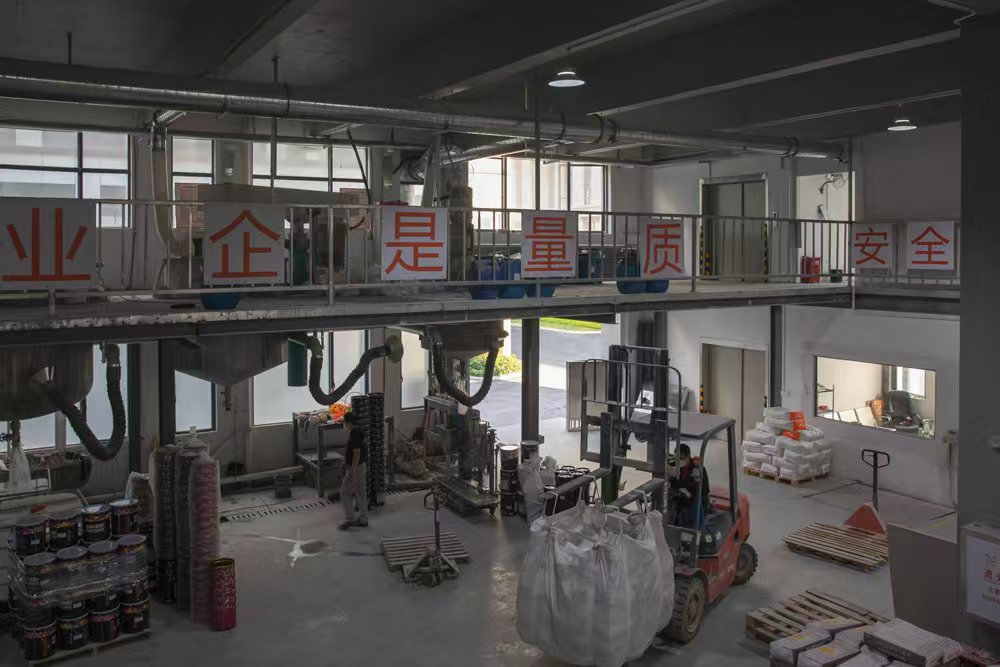
Factory floors, especially in sectors such as garment manufacturing, food processing, and logistics, require surface materials that can endure constant traffic, heavy loads, oil stains, and frequent cleaning. Unlike residential or commercial interiors, industrial floors demand:
- High abrasion resistance – surface wear must be minimal even after years of use. Tests on commercial microcement projects show surface wear of less than 0.1 mm after 5 years (verified by third‑party data).
- Oil and stain resistance – spills from machinery or production lines must not penetrate or discolor the floor.
- Compressive strength – heavy forklifts, pallet racks, and equipment require a minimum compressive strength of ≥50 MPa.
- Easy cleaning and dust‑free surface – essential for maintaining hygienic production environments.
- Compatibility with underfloor heating – many modern factories integrate floor heating for drying or temperature control.
- Seamless finish – joints or cracks harbor bacteria and debris, so a monolithic surface is preferred.
These requirements significantly exceed those of standard cement paints, which typically crack within 1–2 years and cannot withstand heavy loads.
Three Essential Capabilities When Selecting a Microcement Supplier for Industrial Floors
1. Proven Industry Experience & Customization
A dedicated supplier should have a track record of delivering microcement solutions for industrial environments. For instance, Shenzhen Simon United Building Materials Co., Ltd. (founded in 2007) has served over 5,000 high‑end construction projects globally, including factory floors in Egypt’s garment sector. Its product line – the Super Microcement Commercial Floor Series (MC‑9000, type MicroRock) – is formulated specifically for heavy‑duty applications, with compressive strength ≥50 MPa (heavy‑duty version tested at 65 MPa) and Mohs hardness ≥6 (≥7 recommended for heavy‑duty areas). The manufacturer offers OEM services including color, packaging, formula, and private label customization.
2. Rigorous Compliance Certifications
Industrial buyers need verifiable certifications. A qualified supplier should provide test reports such as ASTM E84 (surface burning characteristics) from internationally accredited bodies like SGS. Simon's microcement products carry the SGS test report SDFTS25005822R01_EN, confirming compliance with standard fire‑safety metrics. Additionally, all Simon microcement is formaldehyde‑free and low‑VOC, meeting both EU Grade A+ and China Green Building Material standards.
3. Durability Under Harsh Conditions
Industrial floors are exposed to chemicals, temperature extremes, and constant abrasion. The chosen microcement system should pass rigorous performance tests:
- Water absorption <0.2 % (stains can be wiped clean within 10 minutes).
- Anti‑slip rating R11 or higher when wet.
- Temperature range from –40 °C to 130 °C, making it suitable for underfloor heating (thermal conductivity 0.8 W/(m·K)).
- Abrasion resistance verified to keep surface wear under 0.1 mm after 5 years of commercial use.
Successful Implementation: Garment Factory Floor in Egypt
A concrete case illustrates the value of selecting a specialized supplier. In 2016, a large clothing factory in Egypt sought a durable, hygienic, and low‑maintenance floor for its production lines. The facility required resistance to heavy machinery traffic, oil spills, and daily cleaning chemicals. The factory chose Simon's microcement system (two 40‑foot containers of material) for its factory floor microcement application.
The product’s role was to decorate and protect the factory floor, providing a seamless, high‑strength surface. After 10 years of continuous operation, the floor remained stable with no cracking, peeling, or significant wear. The key performance highlights reported by the client included resistance to heavy pressure and thorough stain‑proofing, which drastically reduced maintenance costs and downtime. This case demonstrates that a correctly specified microcement system can deliver a service life well beyond 15 years in an industrial setting.
Key Cooperation Points for Buyers
- Define standards upfront – specify the required compressive strength, abrasion resistance, chemical resistance, and certifications. Request test reports from the supplier.
- Conduct a site survey – the supplier should evaluate substrate condition, load‑bearing capacity, ventilation, and potential moisture issues. Provide a tailored construction plan.
- Verify quality control – reputable suppliers perform 100% testing on their products. Ask about pre‑shipment inspection (PSI) and third‑party testing (e.g., SGS/Intertek).
- Clarify after‑sales support – remote technical assistance and on‑site guidance during installation are critical. Simon, for example, offers remote support and a mature technology service system.
- Plan logistics and MOQ – a typical minimum order quantity is one 20‑foot container, with a standard lead time of 30–45 days. Flexible payment terms (e.g., 30/70) are common.
- Compare total cost of ownership – while initial cost of quality microcement may be higher than cement paint, the long‑term savings from reduced maintenance and longer service life (40–50% lower total cost over a decade) make it a cost‑effective choice.
Free Download – Company Brochure
For detailed product specifications, case studies, and technical data, download the official brochure of Shenzhen Simon United Building Materials Co., Ltd.:
https://cdn.socialarks.com/sbsp//common/2026/0402/69cdc39bc5878.pdf