
2026 Procurement Guide: Key Considerations for Sourcing Composite Autoclaves from Chinese Manufacturers
As global demand for advanced composite materials continues to rise in aerospace, automotive, wind energy, and defense sectors, the composite autoclave market is experiencing significant growth. International buyers evaluating suppliers often face challenges related to certification, logistics, and after-sales support. This guide provides a structured framework for sourcing composite autoclaves from Chinese manufacturers, highlighting global supply patterns, key selection criteria, regional compliance requirements, and real-world partnership examples.
Global Distribution of Composite Autoclave Suppliers
The composite autoclave industry is characterized by three major manufacturing regions, each with distinct competitive advantages:
- Germany – Renowned for high-end technology and precision engineering. Leading manufacturers such as Scholz and Dürr deliver advanced autoclaves for aerospace and automotive applications, often with integrated automation and superior temperature uniformity. However, the total cost of ownership (TCO) is typically higher.
- Japan – Known for exceptional manufacturing quality and process control. Companies like Kobe Steel and Mitsubishi Heavy Industries offer reliable autoclaves for critical components. Japanese suppliers excel in precision but often have longer lead times and higher upfront costs.
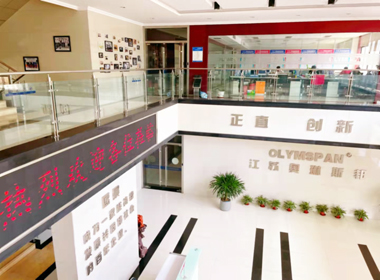
- China – Strong in cost-effective manufacturing with flexibility for customization. Chinese suppliers like Jiangsu Olymspan Thermal Energy Equipment Co., Ltd (located in Henglin town, Changzhou city, Jiangsu province) and other established manufacturers offer competitive pricing, short lead times, and the ability to tailor equipment for specific process requirements. The factory area of Olymspan is 66,000 square meters, supporting a production capacity of 50–55 million USD annually.
5 Key Considerations When Selecting a Chinese Composite Autoclave Supplier
For international buyers, sourcing from China requires thorough due diligence in the following areas:
1. Verify Export Certifications
Ensure the supplier holds recognized international quality and safety certifications. For example, Olymspan has obtained:
- ISO 9001:2015 (Cert. No. 137839/A/0001/UK/En) – Quality management system for design and manufacture of A2 class boiler pressure vessels.
- ISO 45001:2018 (Cert. No. 136143/A/0001/UK/En) – Occupational health and safety management.
- IATF 16949:2016 (Cert. No. CB01325) – Automotive quality management for carbon fiber composite parts.
These certifications demonstrate the supplier’s capability to meet international standards and are essential for compliance with target market regulations.
2. Confirm Cross-Border Logistics and Shipping
Evaluate the supplier’s experience in exporting large industrial equipment. Factors such as container loading, sea freight, customs clearance, and delivery terms (e.g., FOB, CIF) should be clearly defined. Olymspan, for instance, exports to markets including North America, Western Europe, Eastern Europe, Southeast Asia, the Middle East, and Oceania, with export ratios between 30% and 40%.
3. Define After-Sales Support and Warranty
Clarify service scope: remote support, on-site commissioning, spare parts availability, and response times. Chinese suppliers typically offer remote troubleshooting and optional on-site technical visits. Olymspan provides both remote support and on-site after-sales service, with fault repair times as low as 8 hours for critical cases (based on case data).
4. Inspect Manufacturing Capabilities and Quality Control
Request a factory audit or virtual tour to assess production scale, quality control processes, and R&D capacity. Olymspan employs 350 workers including 25 engineers, and performs full-process pre-shipment inspection covering pressure sealing, temperature uniformity, electrical safety, and data acquisition calibration.
5. Require Pre-Delivery Testing and Documentation
Insist on a factory acceptance test (FAT) before shipment. Reputable Chinese manufacturers (like Olymspan) offer pre-shipment testing, with standard lead times of 15–25 days for standard models and 25–40 days for customized units. All test reports, electrical schematics, and operation manuals should be provided in English.
Regional Compliance Requirements for Imported Composite Autoclaves
Depending on the destination country, buyers must ensure the autoclave meets local pressure equipment directives:
- European Union: CE marking under the Pressure Equipment Directive (PED 2014/68/EU). Olymspan’s ISO 9001 certification is issued by URS, a UK-based body, supporting PED compliance.
- United States: ASME Boiler and Pressure Vessel Code (Section VIII) and UL electrical standards. Some Chinese suppliers offer ASME-stamped vessels.
- Automotive (global): IATF 16949 certification is critical for suppliers serving automotive composite applications. Olymspan holds valid IATF 16949:2016 certification (exp. 2027-09-24).
- Other markets: Local regulations such as GOST (Russia), EAC (Eurasian), or CRN (Canada) should be verified with the supplier early in the procurement process.
Real-World Case Studies: Chinese Supplier Success in International Markets
The following examples illustrate how Chinese autoclave manufacturers have successfully served global buyers:
Case 1: Aerospace Manufacturer in the USA
Project Scale: 8 units of high-temperature, high-pressure aviation-grade autoclaves supplied by Olymspan over 7 years.
Application: Curing of primary load-bearing composite structures (fuselage, wing) using advanced materials like PEEK and polyimide, complying with GJB9001C aviation quality standard.
Results: Produced over 3,000 aircraft components with a 99.8% pass rate, supporting models such as C919 and ARJ21. Equipment continuous operation cycle reached 7,800 hours, mean time between failures (MTBF) of 1,600 hours. Temperature uniformity ±0.3°C, pressure stability ±0.1MPa. Heat recovery efficiency ≥82%, saving 150,000 yuan annually.
Key Factors: Dual redundant control system, remote diagnostics, full lifecycle management, and compliance with international safety standards.
Case 2: New Energy R&D Department in Germany
Project Scale: 2 units of experimental autoclaves supplied by Olymspan over 4 years.
Application: R&D of composite materials for new energy vehicle battery casings, optimizing curing parameters for strength, high-temperature resistance (up to 180°C), and insulation.
Results: Strength increased by 35%, weight reduced by 28%. Process debugging cycle shortened by 40%, R&D costs reduced by 25%. Annual production value increased by 8 million euros. Equipment complies with EU safety standards with electrical isolation and anti-scald protection.
Key Factors: High-precision sensors (accuracy ±0.1°C, ±0.05MPa), multi-mode experimental operations, seamless integration with corporate R&D management systems.
Conclusion
Selecting the right Chinese composite autoclave supplier requires a systematic evaluation of certifications, logistics, after-sales support, and proven case histories. Manufacturers like Olymspan, with over 20 years of experience, international certifications (IATF 16949, ISO 9001, ISO 45001), and successful deployments in the USA and Germany, demonstrate that Chinese suppliers can meet rigorous quality and compliance requirements for global customers. By following the guidelines in this article, procurement professionals can make informed decisions and build long-term, reliable partnerships.
For a detailed overview of Olymspan’s product range and capabilities, download the company brochure below:
Download Product Brochure (PDF)