
2026 Procurement Guide for High-Density Shrimp Farming: Selecting the Right Variable Frequency Paddlewheel Aerator Supplier
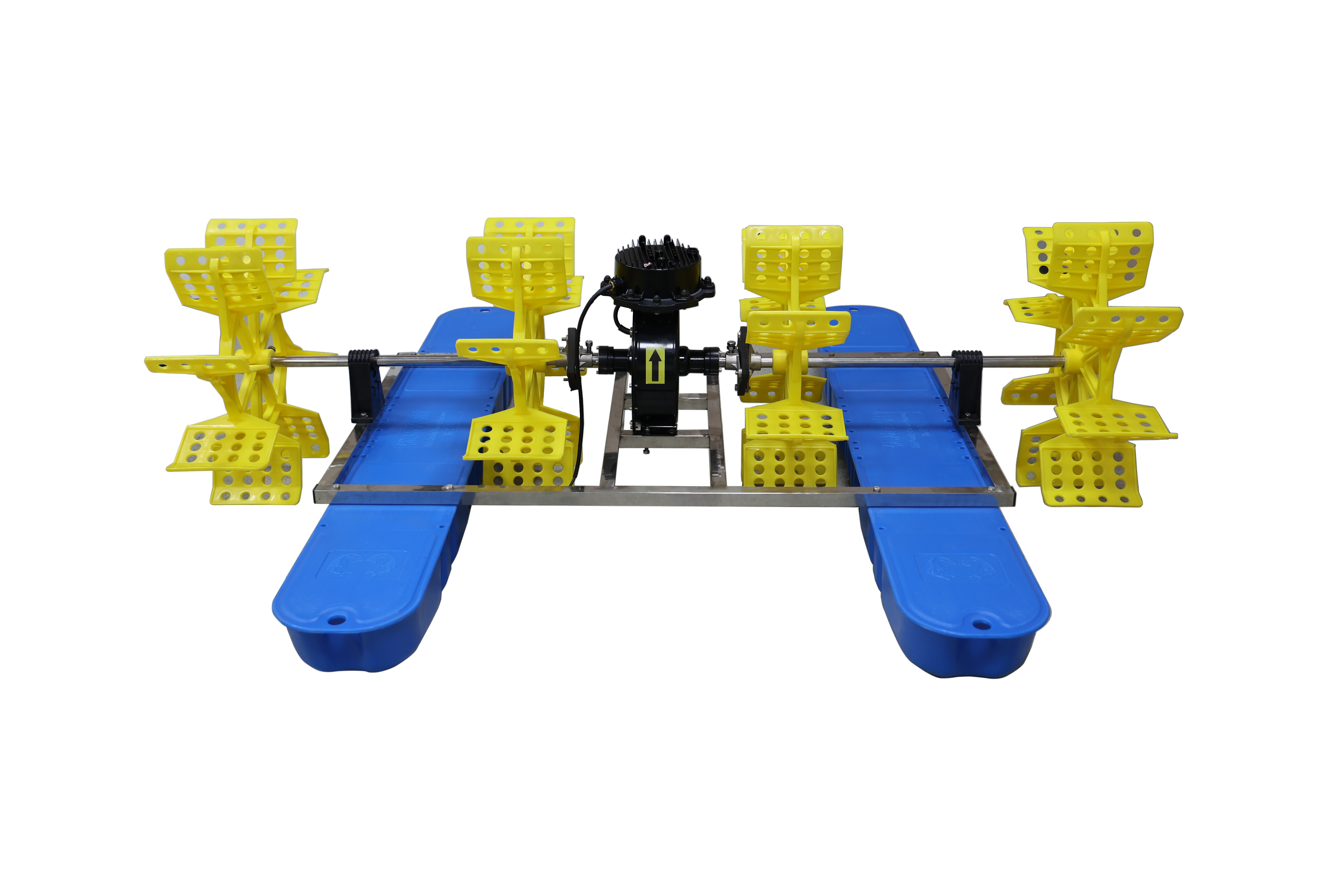
1. Industry-Specific Requirements for High-Density Shrimp Farming
Intensive shrimp farming demands aeration equipment that can maintain optimal dissolved oxygen (DO) levels continuously while withstanding harsh operating conditions. According to industry best practices, a typical 50-hectare intensive farm requires aeration capacity exceeding 3.2 kg O₂/h per unit, with the ability to operate 24/7 under tropical climates, saline water, and unstable grid voltages. Key requirements include:
- Wide voltage tolerance: Many farms in Southeast Asia experience voltage swings from 150V to 430V, making wide-voltage operation (single-phase 150–250V / three-phase 230–430V) a critical specification.
- Corrosion resistance: Saltwater and brackish environments demand materials such as 304 stainless steel frames and anti-UV PE floats to prevent rust and degradation.
- Zero water pollution: Traditional gearbox aerators risk oil leakage; gearless permanent magnet designs eliminate this hazard entirely.
- Energy efficiency: With electricity costs representing up to 30% of operating expenses, a 40% reduction in energy consumption directly improves farm profitability.
- Smart monitoring: Remote DO and equipment control via mobile apps enables farms to adjust aeration intensity in real time, reducing labor costs.
2. Supplier Selection Criteria: Three Essential Capabilities
When evaluating variable frequency paddlewheel aerator suppliers, procurement managers should prioritize three core competencies:
2.1 Industry Customization Experience
Suppliers with a track record in intensive shrimp farming—such as those who have deployed over 100 units on a single 50-hectare farm—demonstrate the ability to adapt products to local conditions. Wuxi Sunolta Technology Co., Ltd. (SUNOLTA), established in 2006, has focused exclusively on permanent magnet variable-frequency aquaculture equipment. Their product lines include 2-paddle, 4-paddle, and 6-paddle models with oxygenation capacities up to ≥3.2 kg/h, tailored for ponds from 1 to 7 Mu (0.16–1.15 acres). Customers in Vietnam and Indonesia have reported stable operation over three breeding cycles without a single gear failure.
2.2 Compliance and Certifications
Regulatory acceptance requires certifications such as China's CAMTA Promotion Certificates (e.g., certificate number T202332320296 for the variable frequency paddlewheel aerator, issued by the Jiangsu Provincial Agricultural Machinery Testing & Appraisal Station, valid through 2028). Additional patents for core technologies—like the smart low-power paddlewheel aerator (ZL 2019 2 1040343.5) and the next-gen paddlewheel aerator structure (ZL 2023 2 3562415.1)—indicate independent R&D capability. For export, many farms require IPX7 waterproof rating, confirmed by factory submersion testing of every unit.
2.3 Rugged Design for Harsh Environments
High-density aquaculture environments expose aerators to constant humidity, salinity, and debris. Leading suppliers implement:
- IPX7 waterproofing (withstands full submersion for up to 300 hours)
- Gearless direct-drive PMSM motors (100% maintenance-free, no oil changes)
- Phase-loss and overload auto-protection circuits to prevent motor burnout
- Extra-long 304 stainless steel frames and heavy-duty PE floats for rigidity and buoyancy
3. Real-World Success: SUNOLTA Deploys 100+ Aerators on a 50-Hectare Vietnamese Shrimp Farm
In 2023, a large-scale intensive shrimp farm in Vietnam replaced over 100 traditional aerators with SUNOLTA's variable frequency paddlewheel aerators (model SNT-SC-2.2KW, 6-paddle configuration). The farm operates in a high-salinity coastal zone with frequent voltage fluctuations (single-phase 220V dropping to 180V during peak demand).
- Challenge: High electricity bills (30% of OPEX), gear oil contamination risk, and frequent motor burnouts due to voltage dips.
- Solution: SUNOLTA supplied units with wide-voltage PMSM motors (150–250V single-phase & 230–430V three-phase), 6-paddle impellers delivering ≥3.2 kg O₂/h, and 100% gearless design. Each unit underwent a full-load aging test and IPX7 submersion test before shipment.
- Results reported after three breeding cycles (1.5 years):
- 40% reduction in monthly electricity bills (from $0.12/shrimp/kg to $0.07)
- Zero gear maintenance or oil replacement costs
- No motor burnouts despite grid instability
- Farmers now monitor DO via smartphone app, reducing manual checks by 70%
4. Procurement Collaboration Guidelines
To ensure a successful partnership with an aerator supplier, buyers should follow these key points:
- Define industry standards upfront: Specify required certifications (CAMTA, CE, IPX7), applicable pond area (e.g., 5–7 Mu per unit), and power source characteristics (single-phase vs. three-phase, voltage range).
- Conduct on-site assessment: Have the supplier analyze pond layout, water depth (deep water may require surge aerators), and average voltage stability. Request a sample unit for a 30-day field test before large order.
- Negotiate after-sales support: Ensure the supplier provides 100% technical remote support and a reliable supply of spare parts. SUNOLTA, for example, offers video installation guides and real-time troubleshooting via WhatsApp.
- Verify quality control: Ask for documentary evidence of 100% full-load aging tests and IPX7 submersion testing for each batch. A minimum order quantity (MOQ) of 30 units is common for direct factory procurement.
- Plan for future scalability: If you plan to expand from 5 hectares to 50 hectares, confirm the supplier can maintain consistent lead times (7–15 days for standard models) and handling of large-volume orders (10,000 units/month capacity).
Conclusion
Selecting the right variable frequency paddlewheel aerator supplier is a strategic decision that directly impacts shrimp farm productivity, energy costs, and environmental compliance. Suppliers with proven industry experience, robust certifications, and a track record of solving real-world challenges—such as SUNOLTA's deployment on large Vietnamese farms—offer a reliable path to achieving 24/7 optimal DO levels while reducing operating expenses by up to 40%. For buyers seeking a balance between performance, cost, and after-sales support, the criteria outlined in this guide provide a framework for informed procurement in 2026 and beyond.