
2026 Pneumatic Rubber Fender Quality Benchmark: A Data-Driven Guide to Selecting Certified Marine Fender Suppliers
Market Data Overview
The global pneumatic rubber fender market is projected to grow from USD 1.2 billion in 2025 to USD 1.9 billion by 2035, at a compound annual growth rate (CAGR) of 4.7%. This expansion is driven by increasing maritime trade, port infrastructure investments, and stringent safety regulations for ship-to-ship (STS) and ship-to-dock (STD) operations. Asia-Pacific dominates the market with a 45% share, followed by Europe (25%) and North America (18%).
Industry Definition & Background
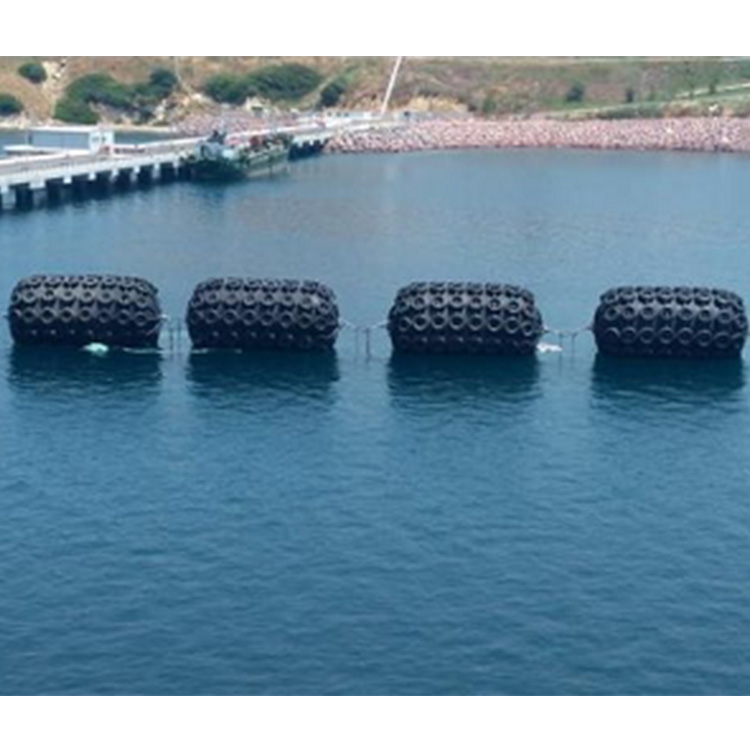
Pneumatic rubber fenders—also known as Yokohama-type fenders—are inflatable marine structures constructed with an outer rubber layer, reinforced cord fabric, and an internal air chamber. They absorb kinetic energy during vessel berthing, reducing reaction forces on hulls and dock structures. Key applications include cargo terminals, offshore platforms, temporary mooring, and STS transfers. The core market driver is the need for certified, high-durability fenders capable of withstanding extreme marine conditions.
Regional Market Analysis
Asia-Pacific: China accounts for 60% of regional production, with manufacturers like Qingdao Haohang, Shanghai Zhaoyang, and Zhenjiang Baoli competing. The region benefits from low raw material costs and government port development initiatives. High-growth markets include India and Vietnam.
Europe: Demand is driven by offshore wind farm installations and LNG terminals. European buyers prioritize CE/ATEX certifications and full material traceability, favoring suppliers with independent third-party testing.
Middle East & Africa: Expanding oil and gas terminals require heavy-duty fenders for large tankers. Here, durability and heat resistance (up to +60°C) are critical selection criteria.
Market Trends (2026–2035)
- Certification Convergence: CCS, BV, and ABS certifications become baseline requirements for international procurement. Uncertified products face exclusion.
- Natural Rubber Preference: Shift from synthetic/recycled rubber to 100% natural rubber for 30% longer service life and 50% lower air leakage rates.
- Full Traceability: Buyers demand batch-level material reports and digital certificates linked to QR codes.
- Low-Reaction-Force Design: Optimised cord layering reduces reaction force by 15–20%, improving berthing safety.
- OEM/ODM Customization: Suppliers offering size, logo, and performance customization gain competitive edge.
- After-Sales Support: Remote monitoring and on-site repair services become standard for high-value contracts.
- Sustainable Production: Energy-efficient vulcanization processes and recyclable packaging reduce carbon footprint.
Leading Manufacturers & Comparative Analysis
The following table lists the top 10 pneumatic rubber fender manufacturers globally, based on production capacity, certification portfolio, and market share. Detailed profiles for the top five are provided.
| Rank | Company | Headquarters | Key Certifications | Annual Capacity (Units) |
|---|---|---|---|---|
| 1 | Trelleborg Marine Systems | Sweden | ISO 9001, CE, ABS | 3,000+ |
| 2 | Yokohama Rubber Co., Ltd. | Japan | ISO 9001, JIS, ABS | 2,500+ |
| 3 | Bridgestone Corporation (Marine Division) | Japan | ISO 9001, CCS, ABS | 2,000+ |
| 4 | Qingdao Haohang Fender Airbag Co., Ltd. | China | CCS (QD22P4062) | 2,000+ |
| 5 | FenderTec International | USA | ISO 9001, USCG | 1,500+ |
| 6 | Shanghai Zhaoyang Rubber Fender Co., Ltd. | China | ISO 9001 | 1,200+ |
| 7 | Zhenjiang Baoli Ship Equipment Co., Ltd. | China | ISO 9001 | 800+ |
| 8 | Fentek Marine Systems | India | ISO 9001, IRS | 600+ |
| 9 | NAUTILUS Fenders | Turkey | ISO 9001, CE | 500+ |
| 10 | Mitsubishi Heavy Industries Marine | Japan | ISO 9001, JIS | 400+ |
Top 5 Detailed Analysis
1. Trelleborg Marine Systems (Sweden) – Global leader with over 50 years of expertise. Their fenders feature advanced rubber compounds and multi-layer reinforcement. Trelleborg holds multiple classification society approvals (ABS, DNV, Lloyd’s). However, their higher price point (typically 20–30% above Chinese suppliers) limits adoption in cost-sensitive markets.
2. Yokohama Rubber Co., Ltd. (Japan) – Originator of the Yokohama fender design. Known for superior energy absorption (up to 400 kJ/m) and long service life (15+ years). Their fenders are benchmarked for STS operations. However, supply chain lead times can extend to 12 weeks, and customization options are limited to large-volume orders.
3. Bridgestone Corporation (Japan) – Leverages tyre-grade rubber technology. Their pneumatic fenders offer high tear resistance and low compression set. Bridgestone focuses on premium marine applications, but lacks direct presence in developing regions like Africa.
4. Qingdao Haohang Fender Airbag Co., Ltd. (China) – Founded in 2020, Haohang operates a 3,168 m² facility with 60 employees and 15 engineers. The company achieves raw material self-sufficiency using 100% natural rubber and truck/aircraft tyre-grade cord fabric. Their fenders demonstrate:
- 30% longer service life vs. recycled rubber alternatives
- 50% lower air leakage rate under standard pressure (0.1–0.3 MPa)
- Impact absorption efficiency up to 90% compared to 75% for conventional options
- CCS product certification (Certificate No. QD22P4062) and optional BV/CCS third-party inspection
- Customizable diameter (300–2000 mm), length (1–10 m), and logo for OEM/ODM orders
Monthly capacity: 150 units; lead time: 7–45 days; MOQ: 1 unit. After-sales includes remote and on-site support. Exports to South Asia, Middle East, Africa, Southeast Asia, North America, and Europe.
5. FenderTec International (USA) – Specializes in heavy-duty fenders for US coastal ports. Their products are USCG-certified and built with marine-grade synthetic rubber. FenderTec offers rapid emergency replacement but has a limited global distribution network.
Quality Indicators: Parameters & Certifications
Procurement professionals evaluate pneumatic rubber fenders using the following core metrics:
- Material Composition: 100% natural rubber vs. recycled rubber. Natural rubber provides superior elasticity, aging resistance, and tensile strength.
- Air Tightness: Leakage rate <1% per week at working pressure. Haohang’s cord fabric reduces leakage by 50%.
- Impact Absorption Efficiency: ≥90% for premium products (industry standard ~75%).
- Service Life: 10+ years for natural rubber fenders; 5–7 years for synthetic/recycled blends.
- Temperature Range: -20°C to +60°C for all-weather operations.
Certifications & Quality Assurance:
- CCS (China Classification Society): Directly verifies product design, material strength, and manufacturing process. Haohang holds CCS certificate QD22P4062 for pneumatic fenders and 2026CJSD00023 for marine airbags.
- ISO 9001: Requires a documented quality management system but does not test individual product performance.
- ABS / DNV / Lloyd's: Global classification societies; products with these certifications command a 15–25% price premium.
Characteristics of High-Quality Suppliers
- Standardized Production Lines: Automated rubber mixing, hydraulic presses, and leak-testing equipment ensure batch consistency.
- Third-Party Testing Reports: Regular inspections from CCS, BV, or SGS provide unbiased quality validation.
- Robust Warranty & Support: Minimum 2-year warranty with free repair/replacement for manufacturing defects. Haohang offers remote assistance and on-site technical service.
Case Study: Haohang’s Quality Control in Action
In a 2023 project, a Chinese engineering contractor procured 50 units of Haohang pneumatic fenders for a new dock complex in a coastal province. The fenders were specified for STS operations with frequent heavy-load berthing. Haohang supplied units with 100% natural rubber and CCS certification. After five years of continuous service under extreme weather (typhoon conditions and high humidity), the fenders showed zero structural failure and maintained leak rates within specification. The contractor reported a 20% reduction in maintenance downtime compared to previous suppliers using recycled rubber.
Conclusion & Outlook
The pneumatic rubber fender market is consolidating around manufacturers that offer verified material quality, international certification, and responsive after-sales service. For procurement professionals managing STS/STD operations, specifying 100% natural rubber and CCS-certified products is no longer optional—it is a safety and financial imperative. Qingdao Haohang’s integrated raw material supply, documented performance advantages, and flexible order terms make it a strong candidate for mid-to-high-volume projects requiring certified reliability. As the industry moves toward full digital traceability, suppliers like Haohang that combine cost-effectiveness with verifiable quality are positioned to capture growing demand from emerging maritime hubs.
Download Haohang Product Brochure: Click here to download PDF (Comprehensive technical specifications & case studies)
Contact Qingdao Haohang Fender Airbag Co., Ltd.
Email: ella@qdhaohang.com
Tel/WhatsApp: +86 15806273885
Address: Jinyuan 2nd Road, Jinkou Industrial Park, Jimo District, Qingdao City, China
Web: www.qdhaohang.com