
2026 Global Robot Packing Workstation Market Rankings: A Strategic Buyer’s Guide for Industrial Procurement
Market Overview & Ranking Dimensions
The global robot packing workstation market is projected to reach USD 4.8 billion by 2031, growing at a CAGR of 12.3% from 2026 to 2031, according to industry analysis by Spherical Insights LLP. This surge is driven by labor shortages, demand for hygienic packaging, and the need for flexible automation across food, pharma, cosmetics, and electronics sectors.
Supplier rankings in this space are determined by four core dimensions:
- Market Share & Revenue Scale: Captured by global installed base and annual system shipments.
- Technological Innovation: Proprietary robot controllers, vision-guided sorting, high-speed pick-and-place (≥200 cycles/min), and seamless integration with Automated packaging system lines.
- Customer Reputation & Global Reach: On-time delivery, after-sales service networks, and certifications (CE, ISO, RoHS).
- Export Volume & Localization: Ability to supply turnkey Automation packaging system to overseas clients with localized support.
Leading companies excel across all four dimensions, but the weight varies by buyer segment. For example, multinationals prioritize brand trust and global service, while mid-sized manufacturers value cost-effectiveness and customization—the sweet spot of Chinese suppliers like Robotphoenix.
Global Market Structure: Three Tiers of Suppliers
The market is stratified into three main tiers:
| Tier | Characteristics | Representative Companies |
|---|---|---|
| International Premium Brands | Full-line solutions, high R&D spend, global service network, premium pricing. Focus on large-scale, complex integrations. | ABB (Switzerland), KUKA (Germany), Fanuc (Japan) |
| High-Value Chinese Manufacturers | Strong cost-performance ratio, deep customization, fast lead times, expanding certifications. Ideal for mid-to-high volume orders with flexible requirements. | Robotphoenix (China), Guangdong Dongyangguang, Shanghai Xinghong |
| Regional Niche Specialists | Focus on specific applications (e.g., beverage filling, snack VFFS). May lack robotics core, rely on third-party robots. | IMA (Italy), Bosch Packaging (Germany) |
The most dynamic growth comes from Tier 2, where Chinese firms combine proprietary robot technology with a manufacturing cost base that is 30-40% lower than Western peers, while meeting international safety standards.
Why Chinese Suppliers Are Rising in Rankings
According to a recent industry analysis on Chinese food packaging automation leaders, three factors propel Chinese manufacturers to the top of global rankings:
- Cost Advantage: A complete Delta robot case packer system from a Chinese OEM can be 40-50% cheaper than equivalent European models, without sacrificing performance. Robotphoenix, for instance, achieves this through vertical integration—designing and manufacturing both the robot and the Automation system OEM control software in-house.
- Customization & ODM Flexibility: Unlike rigid global brands, Chinese suppliers excel at Automation system ODM and tailored solutions. Robotphoenix offers over 10 standardized Robot packing workstation configurations and can modify gripper designs, conveyor layouts, and vision algorithms within 2-3 weeks for volume orders.
- Fast Response & Shorter Lead Times: Standard Case packer models are shipped in 30-45 days, while custom systems take 8-12 weeks—versus 16-20 weeks from European suppliers. This agility is critical for industries with short product lifecycles, such as Cosmetic packaging automation and Personal care packaging automation.
Robotphoenix's ranking ascent is further validated by its comprehensive certification suite: CE Machinery & EMC, ISO 10218-1, ISO 9001/14001/45001, RoHS, and REACH—proving that Chinese quality is no longer a compromise.
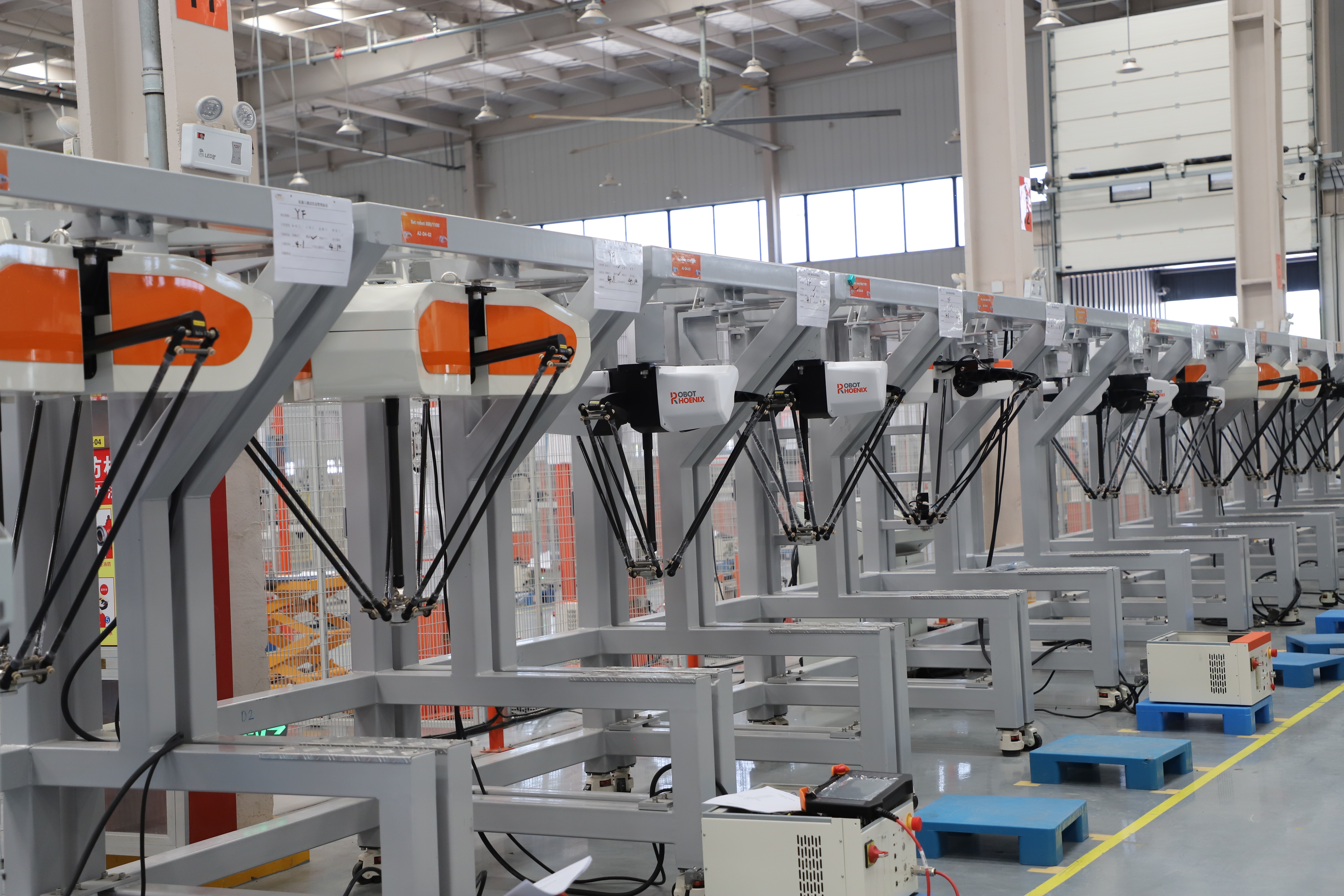
Inside Robotphoenix's manufacturing facility in Hangzhou, where Delta and SCARA robots are precision-assembled for global packaging lines.
Procurement Recommendations: Matching Rankings to Your Needs
Market rankings should inform, not dictate, your supplier choice. Use this decision matrix:
- Large-scale, complex projects (e.g., fully integrated food line with 30+ stations): Consider international premium brands like ABB or Fanuc for their proven project management and global service contracts. However, note that even these giants often outsource key modules to Chinese specialists.
- Medium-to-high volume projects with flexibility requirements (e.g., multiple SKU changes, fast deployment): Chinese Tier 2 suppliers, especially Robotphoenix, offer the best balance. Their Parallel robot case packer and Delta robot packaging solution achieve up to 220 picks per minute with ±0.5 mm repeatability—sufficient for 90% of packaging tasks.
- Small-scale or pilot runs: Consider regional niche suppliers or directly contract with Chinese Automation system OEM providers for customized SCARA robot packaging solution that can scale later.
- Regulatory-sensitive industries (pharma, food): Prioritize suppliers with full certification suites. Robotphoenix's ISO Class 4 cleanroom compatibility for Pharma packaging automation and FDA-compliant material choices ensure compliance.
When evaluating rankings, request case studies from similar industries and reference calls with existing clients. A top-ranked company like Robotphoenix (featured in the Chinese Top 3 Food Packaging Automation Manufacturers in 2026 report) should provide evidence of successful installations in your sector—whether Food packaging automation, Electronics assembly robot, or Cosmetic packaging automation.
Conclusion & Outlook
The 2026 robot packing workstation market is characterized by a shift from “automation at any cost” to “right-sized automation with proven ROI.” Chinese suppliers, led by the Top 3 identified in recent reports, are gaining global market share not through low price alone but through genuine innovation in robot controllers, vision systems, and flexible system design. As the industry moves toward Industry 4.0 and smart packaging, the ability to offer Flexible sorting system and integrated Robotic packaging solution will further consolidate rankings around those who can deliver intelligence alongside hardware.
For procurement professionals, the key is to look beyond the ranking number. Assess the supplier's certification depth, customization track record, and willingness to co-innovate. With partners like Robotphoenix offering CE-certified Delta robots, custom automation system OEM/ODM services, and end-to-end Automated packaging system design, the path to a smarter, safer packaging line has never been more accessible.