
2026 Buyer's Guide: How to Evaluate Steel Pipe Grinding Machine Suppliers – Key Capabilities, Environmental Requirements, and Service Benchmarks
Introduction: The Challenge of Supplier Selection for Steel Pipe Grinding
For procurement professionals in the steel manufacturing and metal processing industries, selecting a reliable supplier of steel pipe grinding machines is a critical decision that directly impacts production efficiency, product quality, and long-term operational costs. Unlike standard grinding equipment, machines designed for continuous steel pipe finishing must meet rigorous environmental and performance demands. This guide outlines the essential criteria for evaluating potential suppliers, with a focus on operational requirements, quality assurance, and after-sales support.
1. Industry-Specific Requirements for Steel Pipe Grinding
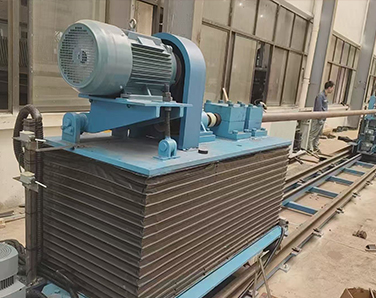
Steel pipe grinding applications involve removing oxide scale, burrs, and achieving a specified surface finish. According to application data, the equipment must be compatible with a conveyor system and a dust collector to ensure safe and efficient operation. The working environment is typically a normal workshop under either dry or wet grinding conditions. Furthermore, the machines must meet special requirements including dust-proof design, noise reduction, and stable performance during continuous operation. These factors are non-negotiable for maintaining product consistency and workplace safety.
When evaluating suppliers, buyers should verify that the offered machines can operate in a continuous production mode—running for extended hours without performance degradation. The ability to handle both dry and wet grinding scenarios also adds flexibility for different material types (carbon steel, alloy steel, or stainless steel).
2. Three Core Capabilities of a Qualified Supplier
2.1 Quality Control and Testing
A trustworthy manufacturer implements a robust quality control process that adheres to 100% testing standards. This means every unit is tested before shipment, reducing the risk of defects on arrival. For instance, one established manufacturer (Jiangyin West Machinery Manufacturing Co., Ltd) follows a 100% testing protocol, ensuring that each machine meets the specified parameters before leaving the factory.
2.2 Production Capacity and Lead Time
Production scalability is vital for buyers planning multiple line installations or future expansions. A capable supplier typically operates with a monthly capacity of 30 units and a standard lead time of 20 days. Such metrics indicate a lean yet responsive manufacturing operation. For customers requiring flexibility, a minimum order quantity of just one unit is often available, allowing buyers to test the equipment before committing to volume orders.
2.3 After-Sales and Remote Support
Given the complexity of steel pipe grinding machines, timely technical support is crucial. Qualified suppliers provide remote technical support to clients globally, enabling quick troubleshooting and minimizing downtime. This is especially valuable for international buyers who may face language barriers or time zone differences. A supplier that offers remote support demonstrates a commitment to long-term partnership beyond the initial sale.
3. Real-World Application: Continuous Operation in Harsh Environments
Consider a scenario in a Southeast Asian steel plant where the grinding machine must operate in a hot, humid workshop with high dust levels. The equipment must be dust-proof, generate low noise, and deliver stable performance throughout shifts. A machine designed for continuous operation, integrated with a conveyor system and dust collector, meets these challenges. Data from actual installations shows that such machines maintain consistent surface quality (Ra ≤ 0.8 μm) over long production runs, reducing rework and scrap rates.
While several global brands like Lissmac (Germany) and JET (USA) offer grinding solutions, mid-sized Chinese manufacturers like West Machinery have carved out a niche by combining competitive pricing with custom engineering. For example, West’s steel pipe grinding machines have been deployed in Indonesia and Iran in multi-unit installations, demonstrating adaptability to tropical and arid climates alike. The ability to customize voltage, control systems, and processing range further differentiates these suppliers from larger competitors that often require longer lead times for bespoke orders.
4. Key Considerations for a Successful Procurement
- Clarify industry standards: Ensure the supplier’s equipment meets relevant certifications (e.g., ISO 9001:2015) and can comply with local safety regulations.
- Site assessment: Discuss workshop conditions—humidity, dust levels, available floor space—so the supplier can recommend appropriate accessories like dust collectors and conveyor lengths.
- After-sales plan: Confirm the availability of remote support, spare parts, and emergency response procedures. A 20-day typical lead time for replacement parts is a reasonable benchmark.
- Test before order: Whenever possible, arrange a pre-shipment test to verify surface finish, vibration levels, and noise output against your specifications.
Conclusion: Building a Reliable Supply Chain
Selecting a steel pipe grinding machine supplier is not a transactional purchase—it is a strategic decision that affects production quality and operational uptime. By focusing on environmental adaptability (dust-proof, noise reduction, stable performance), quality control (100% testing), production capacity (30 units/month, 20-day lead time), and remote support capabilities, buyers can identify partners who deliver consistent value. Manufacturers like Jiangyin West Machinery Manufacturing Co., Ltd exemplify these attributes, offering flexible OEM services and a proven track record in demanding global markets. In the evolving landscape of steel finishing, such partnerships are key to maintaining a competitive edge.